The Queen’s Court
Where stories, shadows, and sovereigns assemble.
The Queen’sGreeting
A court of crimson oaths and wandering souls.
Untitled
| AGE | 31 |
| PRONOUNS | She/her |
| TIMEZONE | CAT / UTC 2+ |
| CONTACT | In-game/Discord |
| REPLY SPEED | Varied |
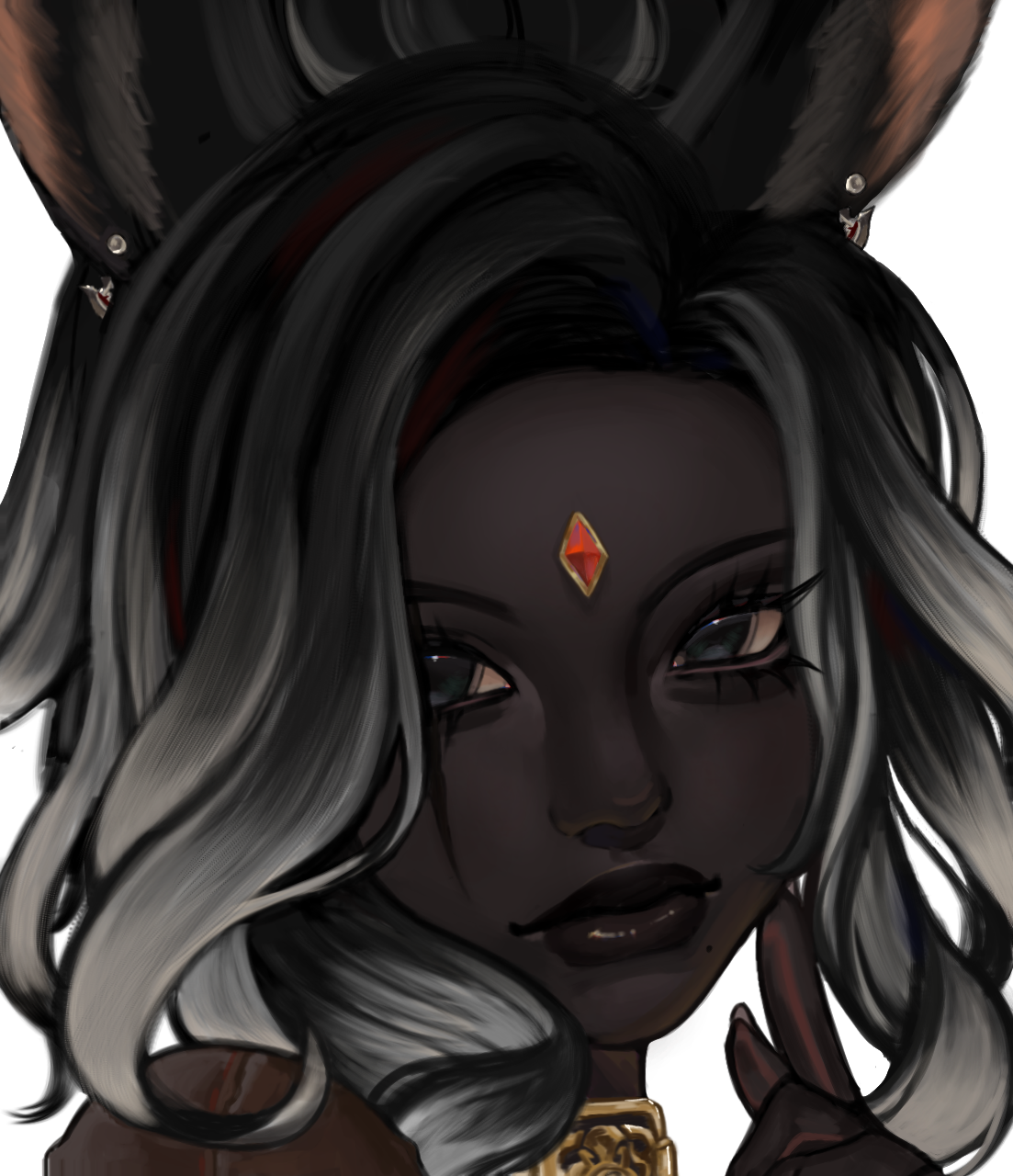
HELLO, I'M Queen! Hello! I’ve been roleplaying for about seven years. It’s my favourite pastime, and I’ve gathered quite a few characters along the way. Some of them are listed here.They come in many forms, from cruel and ruthless individuals to cunning, noir-styled personalities, and plenty of shades in between.I work full-time, so replies may occasionally be slow, but I’ll always answer when I can. If any of the characters here catch your interest, please feel free to ask about them.
Boundaries
╰ My boundaries. [Respect is given].
The Do's
╰ Yes, you may.
Approach for RP. I am always open to plotting and spontaneous roleplay.
Ask about my characters.. I enjoy discussing their lore, history, and relationships.
Multi-ship and crossovers.. These are welcome if the dynamics make sense.
Slow-burn plots, casual one-shot RP, and E/RP are all fine with discussion.
OOC communication. Always happy to chat OOC about plots, ideas, or simply make friends.
The Don'ts
╰ No, you may not.
Do not dictate my character’s actions or reactions. Such matters should be discussed.
Forcing ships or plots. Chemistry should develop naturally between characters.
Meta-gaming. Characters should not know information they have not learned in RP.
Never Ever
╰ Do not interact.
Harassment or hostility. This space is meant to remain respectful.
Bigotry of any kind. Racism, homophobia, transphobia, or similar behaviour is not tolerated.
Ignoring boundaries. If something is stated here, please respect it.
⸺ Enter with respect, and the court shall welcome you. ⸺
The Decorum
╰ Roleplaying Etiquette. [Do read carefully.]
RULE 01
╰ ADULT COURT ONLY.
All characters and writers must be 21 years of age or older. This is non-negotiable.My roleplay often explores mature themes, including darker narrative elements and ERP. Because of this, I only write with adults who are comfortable engaging with such material responsibly.If you are under 21, please do not interact for roleplay purposes. This boundary exists to maintain a comfortable and appropriate writing environment for everyone involved.
RULE 02
╰ MUN ≠ MUSE.
My characters and their actions do not reflect my personal beliefs, values, or behaviour.Many of the characters here explore darker themes, flawed personalities, and morally complex situations. Their actions, opinions, or relationships exist within the context of storytelling, not as an expression of my own views.Please keep in-character and out-of-character interactions separate.
RULE 03
╰ RESPECT AND COMMUNICATION.
Respect between writers is expected at all times.If something in a storyline makes you uncomfortable, please communicate openly and we can adjust the direction of the plot. Likewise, I expect my own boundaries to be respected.
Characters
╰ A court of crimson vows. [Will you kneel… or Bleed?]
Queen Yharnam
╰ The Last Sight You'll ever see.
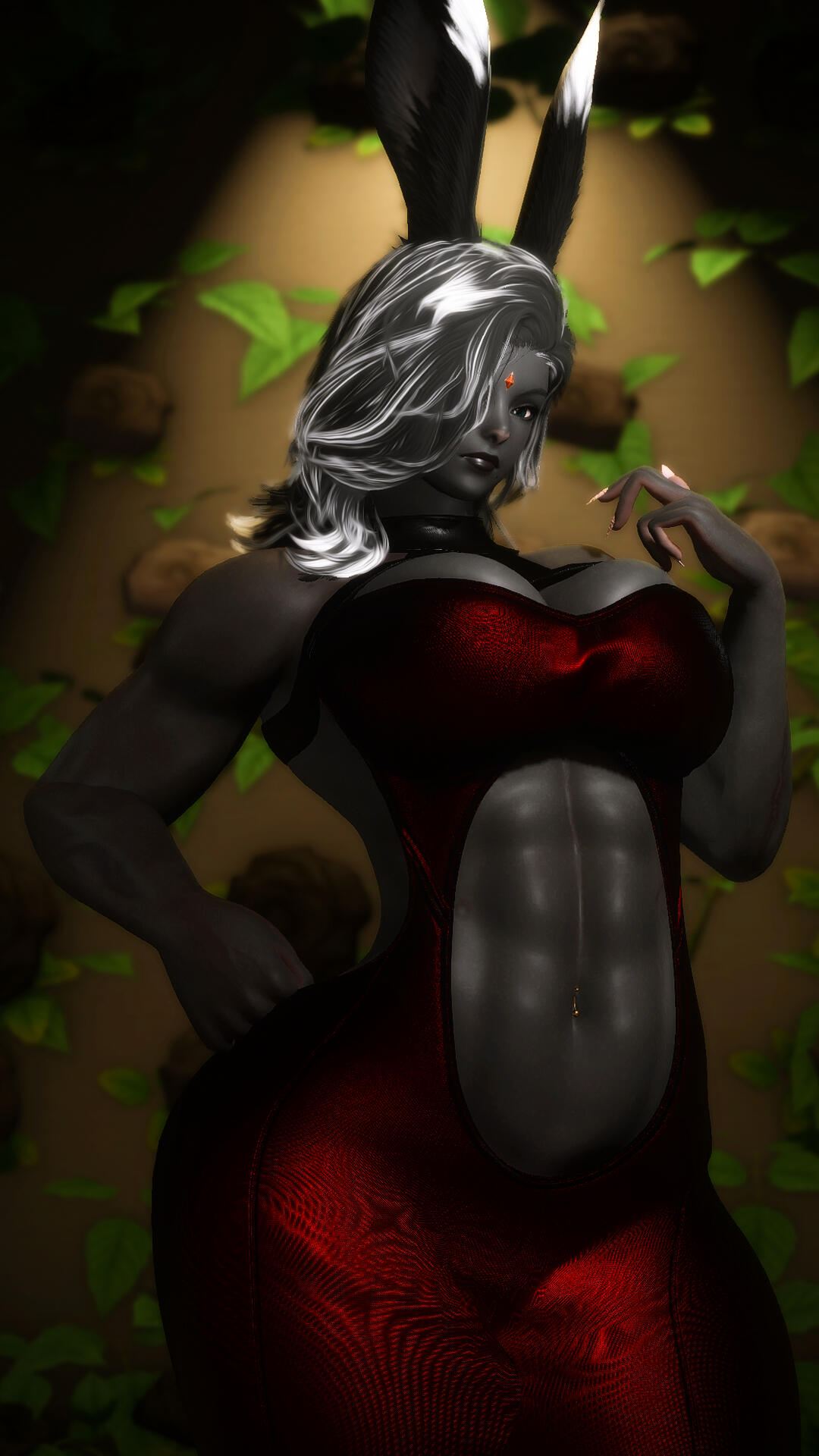
Standing just under twelve feet tall, Queen is an imposing and formidable presence. Those who fail to earn her regard are little more than dust beneath her heels. Born in the First long before the Flood, she has seen 569 summers pass, and the years have only sharpened the steel of her will.Her favour is not given lightly, nor is it easily escaped once claimed. Queen is not a gentle companion but a trial unto herself, a challenge that demands obedience, endurance, and strength from those who would remain at her side. Go on, then. Show her what you are made of.
| AGE | 569 |
| PRONOUNS | She/her |
| SPECIES | Viera |
| BIRTHDATE | 32nd Sun of the 3rd Umbral Moon |
| SEXUALITY | Bisexual |
| POSITION | Strictly Dom |
| RP STATUS | Active |
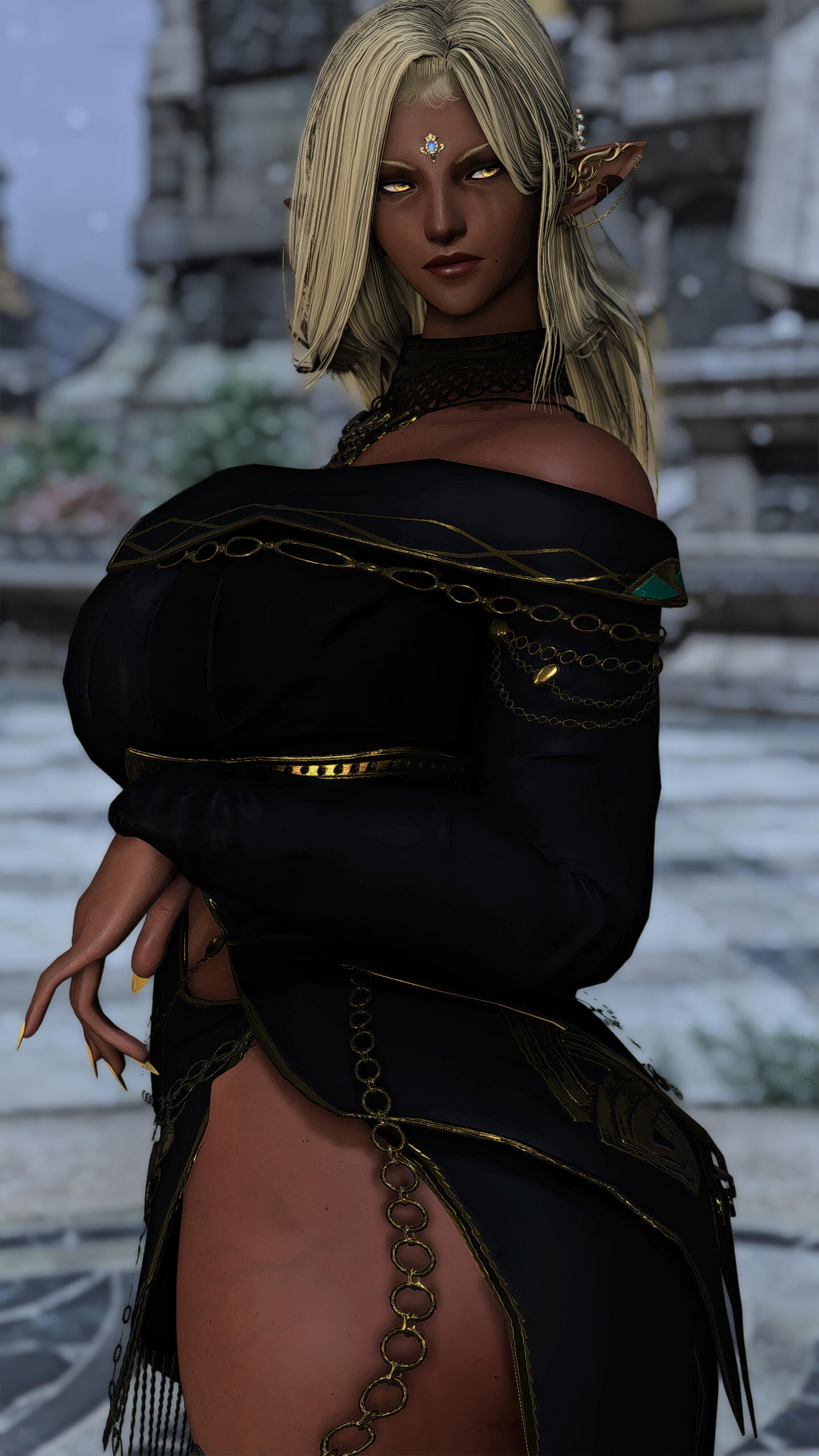
Lady Lazara
╰ A Whisper That Ruins Lives.
Lazara Once a woman men believed they could buy, Lazara proved otherwise. Years spent among silk sheets and careless nobles taught her the most valuable currency in the world is not coin, but secrets. She listened when others ignored her, remembered what others forgot, and gathered more leverage than any lord would dare admit exists.Now she walks above the very people who once thought her beneath them. Nobles do not welcome Lazara into their halls anymore. They fear her presence there.Beautiful, composed, and utterly merciless when crossed, Lady Lazara is no simple courtesan. She is a collector of weaknesses and a master manipulator.After all, a single whisper from her lips can ruin a life.
| AGE | 43 |
| PRONOUNS | She/her |
| SPECIES | Elezen |
| BIRTHDATE | 16th Sun of the 4th Umbral Moon |
| SEXUALITY | Bisexual |
| POSITION | Dom |
| RP STATUS | Active |
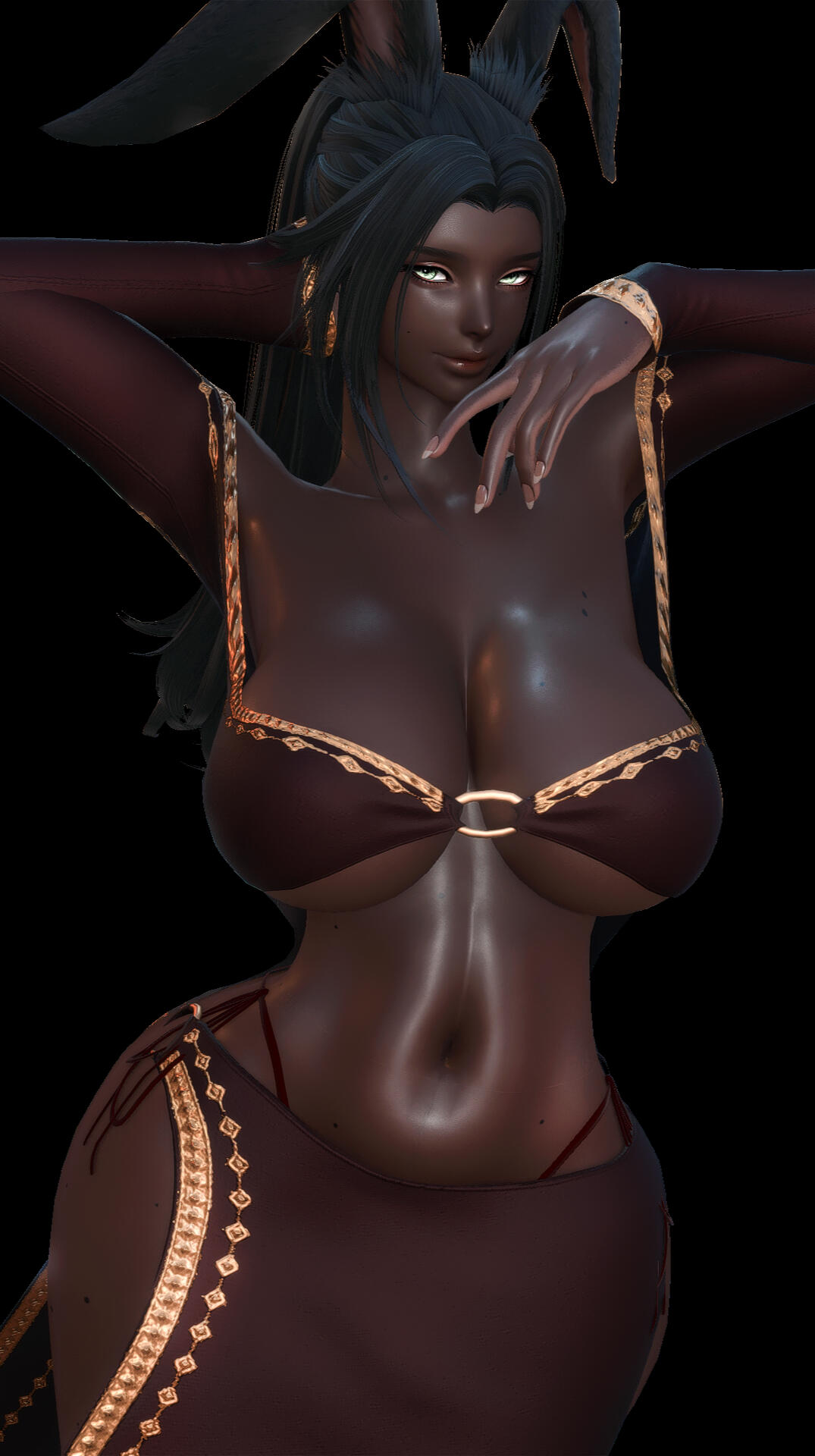
Lakshmi Sundari
╰ The Lotus in Bloom.
Raised among the Ananta, Lakshmi Sundari moves through the world with a calm that does not belong to any ordinary woman. Those who meet her find their burdens lightened, their thoughts quieter, their hearts eased without knowing why.For within her rests Sri Lakshmi, slowly awakening. When her emotions stir, that presence begins to surface, and the line between woman and goddess grows thinner with each passing moment.She does not resist it. Not yet.
| AGE | 41 (Approx.) |
| PRONOUNS | She/her |
| SPECIES | Viera |
| BIRTHDATE | Unrecorded |
| SEXUALITY | Gay |
| POSITION | Dom |
| RP STATUS | Active |
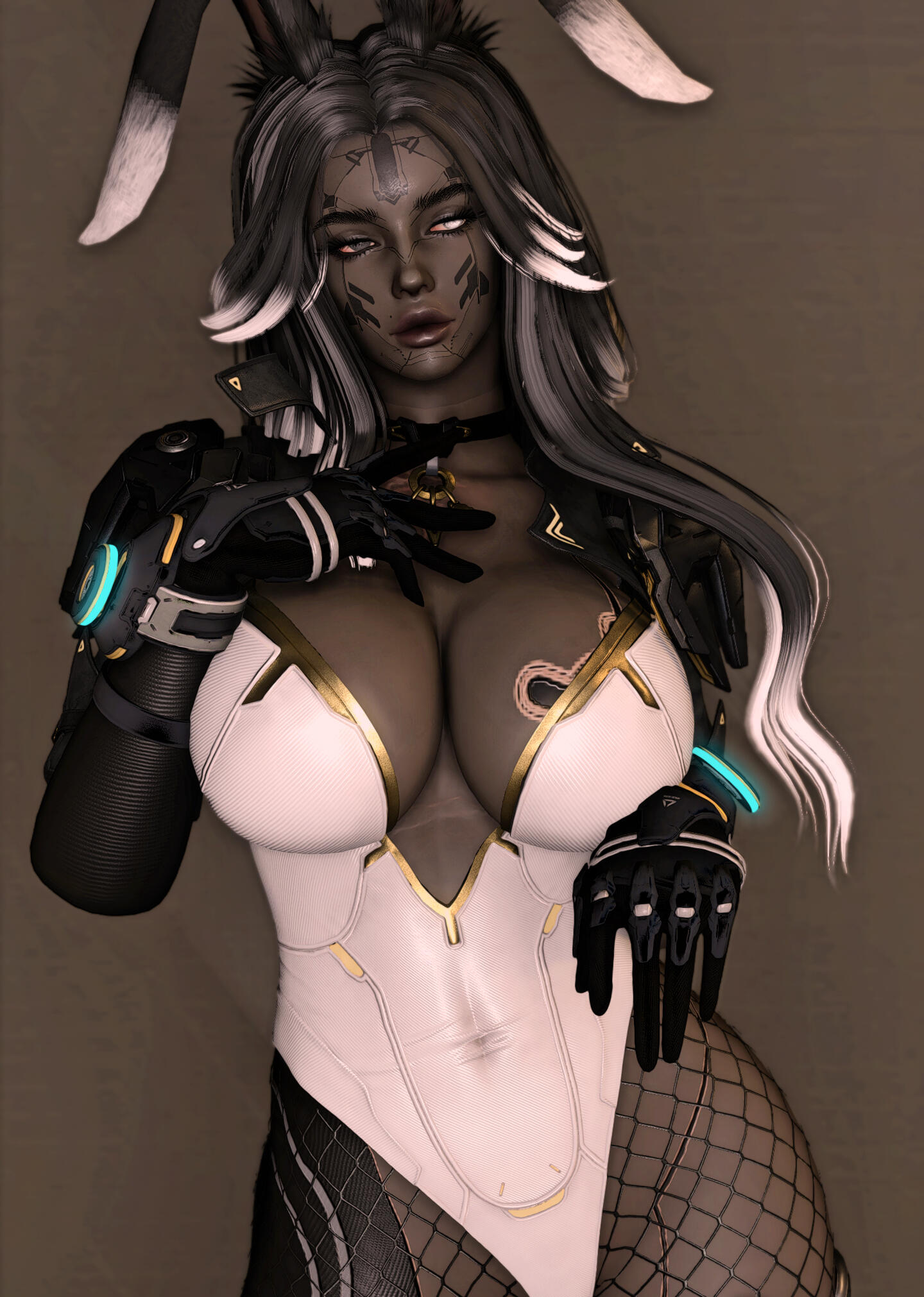
Ava.
╰ A heart that refuses to rust.
Ava is a former Garlean experiment, once Viera, now a cybernetic weapon that no longer ages. After turning on her captors, she fled to Eorzea and was taken in by Gaius van Baelsar at Terncliff. There, she found a name, a family, and a fragile sense of belonging.When the Weapons destroyed that peace, she survived; the children did not. Now she remains, caring for what was left behind, haunted by failure and the question of whether she can still be human.
| AGE | Unknown |
| PRONOUNS | She/her |
| SPECIES | Former Viera |
| BIRTHDATE | Unknown |
| SEXUALITY | Bisexual |
| POSITION | No roles or Dom |
| RP STATUS | Active |
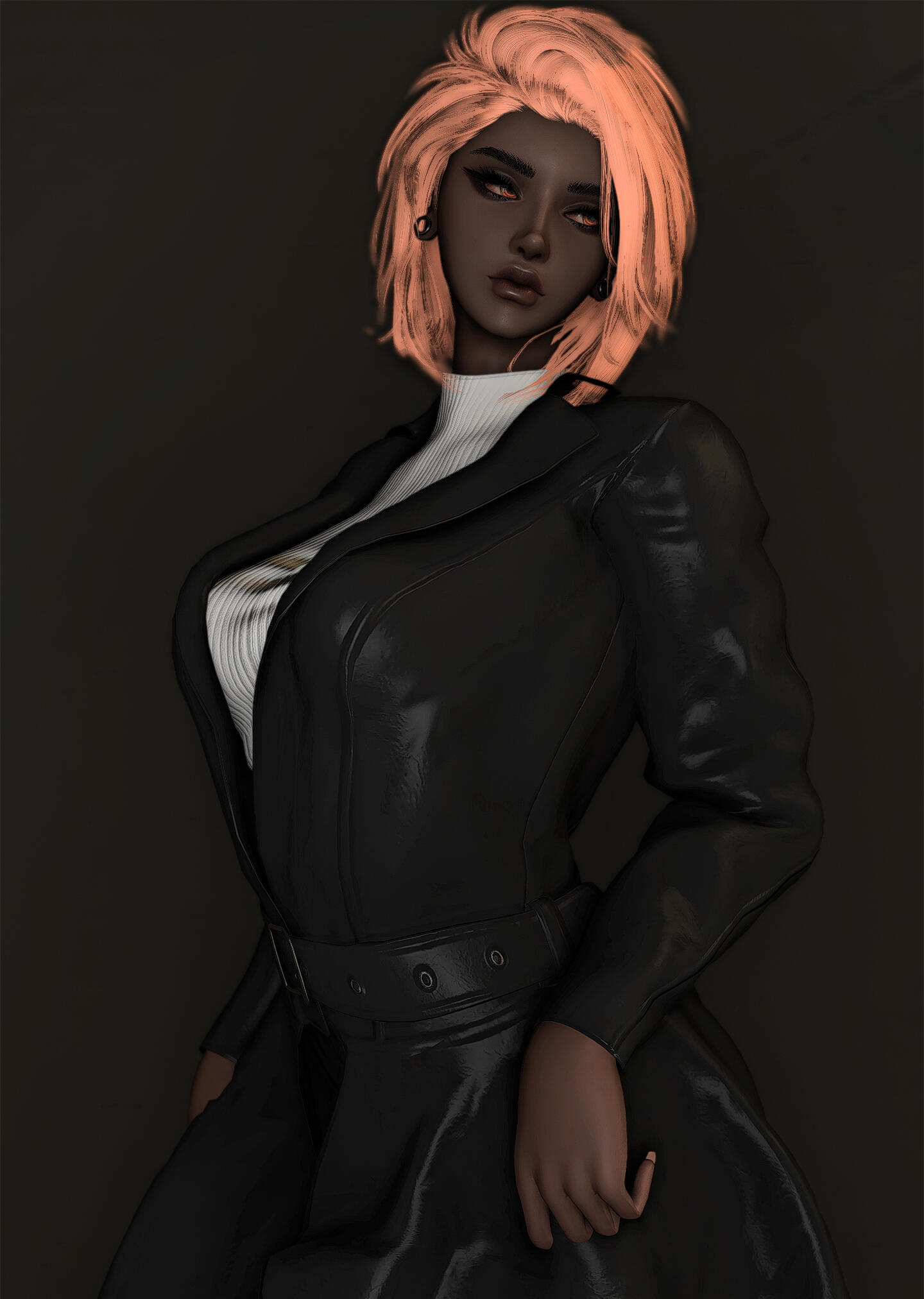
Clara Bridges
╰ Every lie leaves a trail.
Ishgard breeds secrets the way cold stone breeds frost, and Clara has made a trade of uncovering them. Not a knight and not beholden to the church, she works the quiet side of the city as a private investigator, taking the cases that slip through official hands.She watches what others miss: a hesitation in someone’s voice, the wrong glance across a room, a lie told a little too quickly. Lost children, stolen heirlooms, missing people, questions no one with power wants asked.
| AGE | 31 |
| PRONOUNS | She/her |
| SPECIES | Hyur |
| BIRTHDATE | 1st Sun of the 3rd Umbral Moon |
| SEXUALITY | Bisexual |
| POSITION | No roles or dom |
| RP STATUS | Active |
Aurelia van Celsus
╰ Daughter of the Empire.
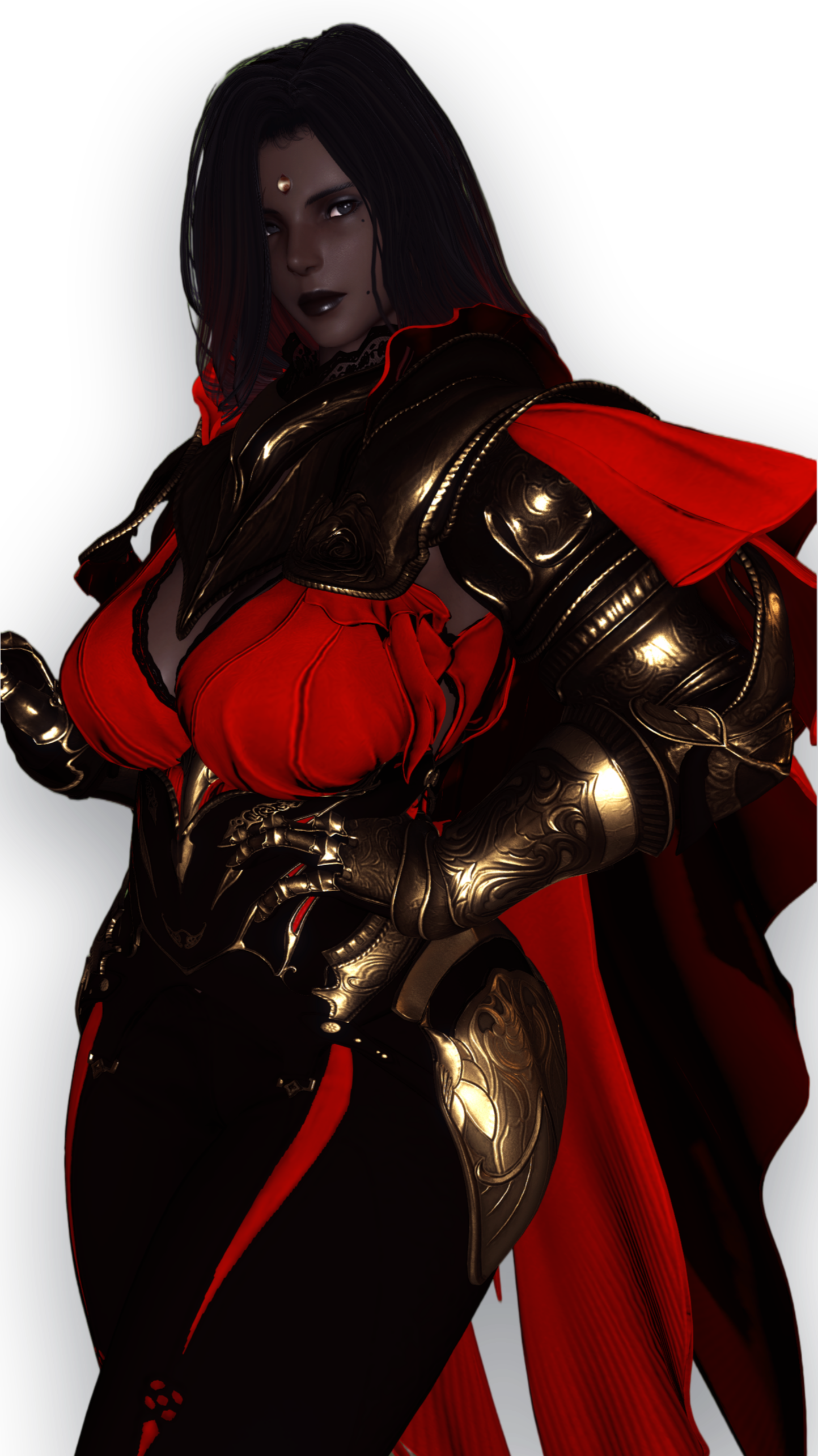
Once a proud van of the Imperial military, Aurelia watched the nation she devoted her life to collapse around her. Emperors died, legions scattered, and Garlemald was reduced to ruins, yet her loyalty survived every one of them. Where others speak of a fallen Empire, Aurelia sees only a wounded one.Proud, uncompromising, and fiercely devoted to her people, she carries the old Imperial title as though nothing has changed. She seeks no redemption for Garlemald, nor forgiveness for what was done beneath its banner. The world may have decided the Empire is dead.Aurelia van Celsus has not.
| AGE | 40 |
| PRONOUNS | She/her |
| SPECIES | Garlean |
| BIRTHDATE | 16th Sun of the 6th Astral Moon |
| SEXUALITY | Bisexual |
| POSITION | Dom |
| RP STATUS | Active |
Queen Yharnam
╰ The Last Sight You'll ever see.
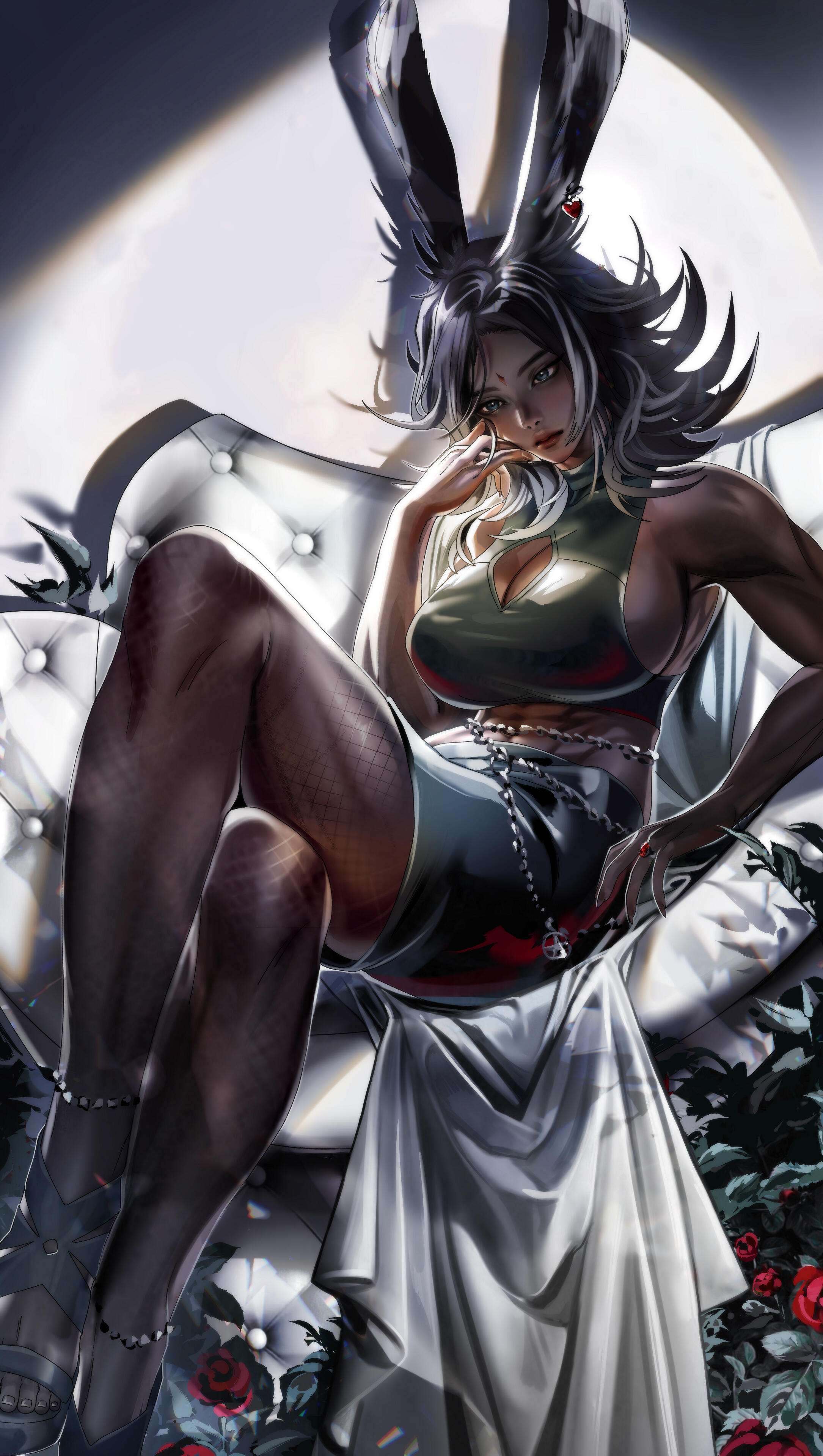
There are those who believe that time softens even the hardest of hearts, that enough years will dull old wounds and teach even the cruellest of souls the virtue of mercy. Queen has lived long enough to know otherwise. Centuries have passed beneath her feet, kingdoms have risen and fallen, and entire generations have returned to the earth while she has remained to witness their passing. Whatever tenderness she once possessed has long since become something far more difficult to recognise. Time has not made her kinder. It has merely afforded her countless opportunities to discover how much cruelty she is capable of.Yet even the most formidable creatures were once small. Long before her name inspired fear, Queen knew the warmth of a hearth, the comfort of a familiar voice and the simple happiness of belonging somewhere. She knew love before she understood that it could wound, and she learned to endure long before she learned to question why endurance was expected of her. The hands that offered affection also taught her pain, until the distinction between the two became increasingly difficult to recognise. She grew beneath the weight of expectations that could never quite be satisfied, forever reaching for a tenderness that seemed to retreat whenever she drew close. In time, she became strong enough that few could hurt her, though strength did little to preserve the gentler things she had once cherished.There came a day when Queen finally turned her back upon everything that had shaped her. She left behind the only home she had ever known, carrying little beyond the scars upon her body and the weapon that had become an extension of herself. She believed that whatever lay beyond the familiar boundaries of her childhood must surely offer something different. Instead, she discovered a world in which the strong continued to prosper at the expense of the weak, where affection was readily exploited and where mercy was seldom returned in equal measure. She travelled for centuries, beholden to nobody and unwilling to surrender the freedom she had claimed. When the Flood of Light eventually swallowed much of the First, she survived that too, though the destruction of her world did little to inspire any newfound affection for those who inhabited it. She had spent too long learning to stand alone to concern herself with those who could not.Her wandering eventually carried her beyond the First and into the Source, where the cold stone streets of Ishgard offered something she had not sought in centuries: a place worth remaining. There she established a home, though the comforts of civilisation did little to temper her disposition. Queen had long since discovered that fear could open doors which courtesy could not, and that the obedience of another could be considerably more entertaining than their admiration. She found particular pleasure in those who approached her with confidence, for there was something delightful about watching certainty falter beneath her attention. A proud individual reduced to pleading, a defiant spirit made hesitant, a devoted companion desperate for the smallest indication of approval. Such things amused her far more than the ordinary pleasures of wealth or recognition.To mistake Queen for a creature incapable of affection, however, would be to misunderstand her entirely. She can be attentive, unexpectedly generous and, on rare occasions, genuinely tender. Yet her kindness is no promise of safety, and those fortunate enough to earn her favour may discover that affection merely affords her more intimate opportunities for cruelty. She knows how precious a little warmth can become when it is offered sparingly. She knows the peculiar desperation of waiting for a kind word, the relief of forgiveness and the lengths to which someone might go to avoid disappointing the person whose approval they desire. She knows these things intimately, and she has learned to employ them with extraordinary patience.Queen does not require hatred to inflict suffering, nor does she believe that cruelty must serve some greater purpose. She takes pleasure in another's fear, in the slow erosion of their dignity and in the terrible uncertainty of never knowing whether her next gesture will offer comfort or punishment. Sometimes she delights in the struggle of those who resist her. At other times, their surrender is merely the beginning of her amusement. She has no particular objection to taking a life when doing so pleases her, and the innocence of another offers little protection against her whims. She is perfectly capable of recognising suffering for what it is. Indeed, that understanding is often precisely what makes it so enjoyable.And so she remains in Ishgard, a towering Viera whose charcoal-dark skin bears the scars of a life that has endured far longer than nature ought to permit. There is something almost regal about her bearing, though she wears no crown and recognises no throne above her own. She commands without raising her voice, accepts reverence without gratitude and dispenses mercy only when the fancy takes her. Those who seek to understand her may find themselves searching for some ancient sorrow, some buried innocence that might yet be coaxed back into the light. Perhaps they will even find it. Queen has never entirely forgotten the warmth of a hearth or the sound of a lullaby.She simply no longer wishes to be the one who begs for them.Once, she had believed that suffering was something to be endured, that strength would eventually earn her the tenderness she so desperately desired. Centuries have passed since those innocent convictions, and Queen has discovered far greater pleasures in being the one who decides when another's suffering begins and whether it shall ever end. She remembers what it is to plead for kindness, to cling to the smallest gesture of affection and to wonder whether tomorrow might bring something gentler. Such memories have not made her merciful. They have merely taught her how exquisitely hope can be used against another.And should someone fall to their knees before her, trembling and desperate for the slightest kindness, Queen might even remember a time when she would have done the same.How delightful it is, then, to be standing on the other side.
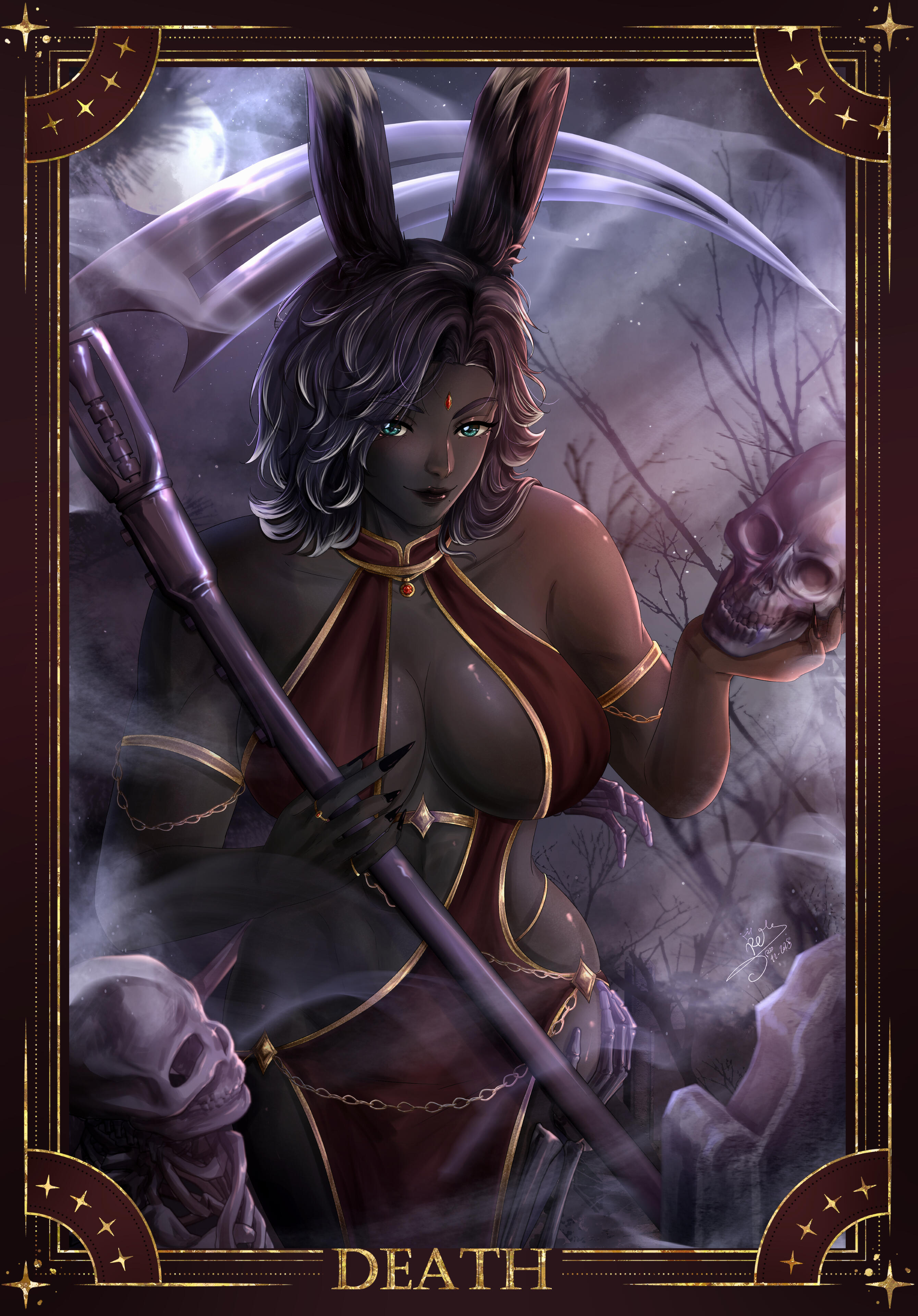
| AGE | 569 |
| HEIGHT | 11'7" / 354cms |
| WEIGHT | ~750KG |
| PRONOUNS | She/her |
| SPECIES | Viera |
| BIRTHDATE | 32nd Sun of the 3rd Umbrla Moon |
| SEXUALITY | Bisexual |
| POSITION | Strictly Dom |
| RP STATUS | Active |
The Proceedings
╰ Of Life and Judgement
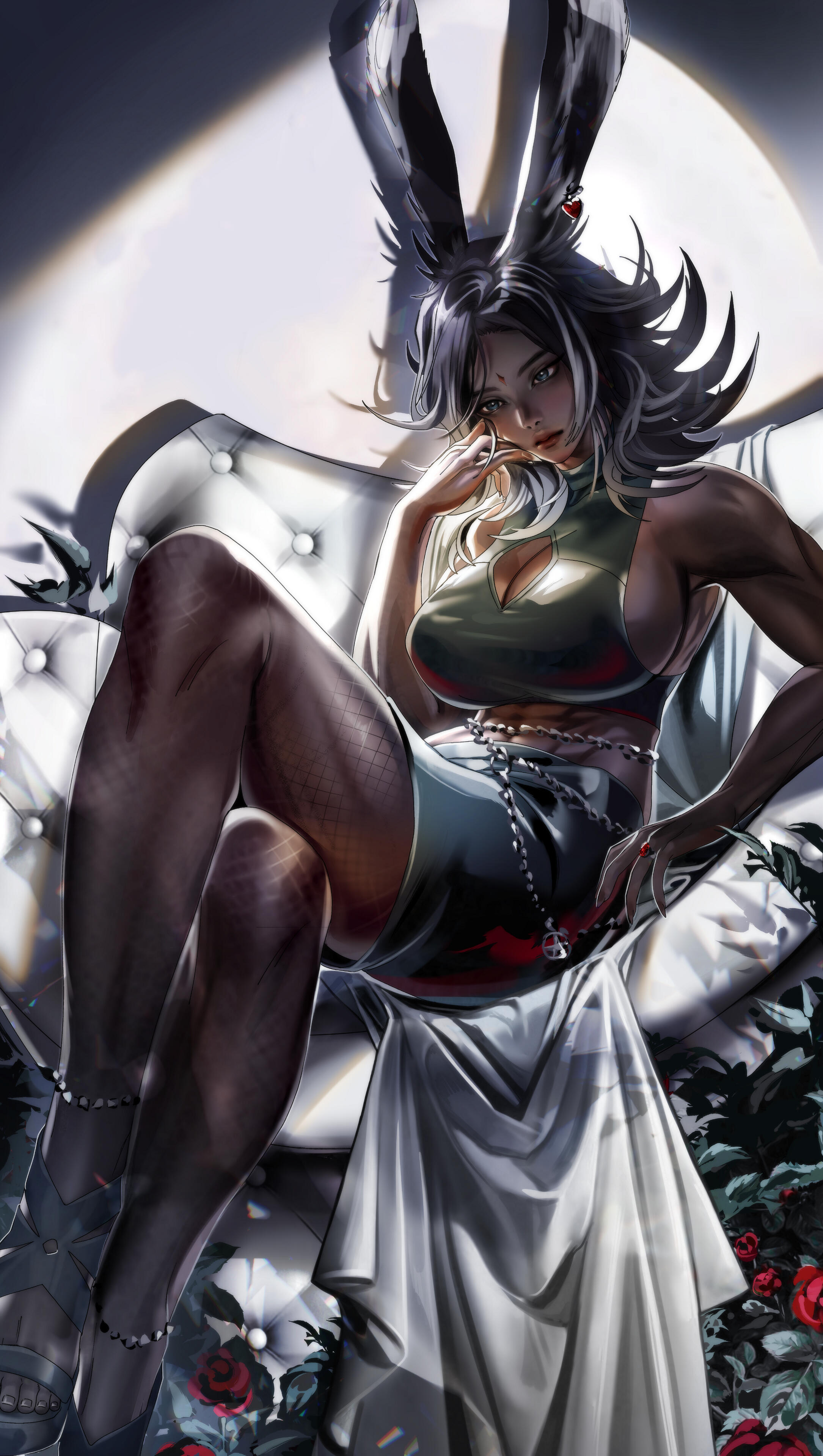
| AGE | 569 |
| HEIGHT | 11'7" / 354cms |
| WEIGHT | ~750KG |
| PRONOUNS | She/her |
| SPECIES | Viera |
| BIRTHDATE | 32nd Sun of the 3rd Umbrla Moon |
| SEXUALITY | Bisexual |
| POSITION | Strictly Dom |
| RP STATUS | Active |
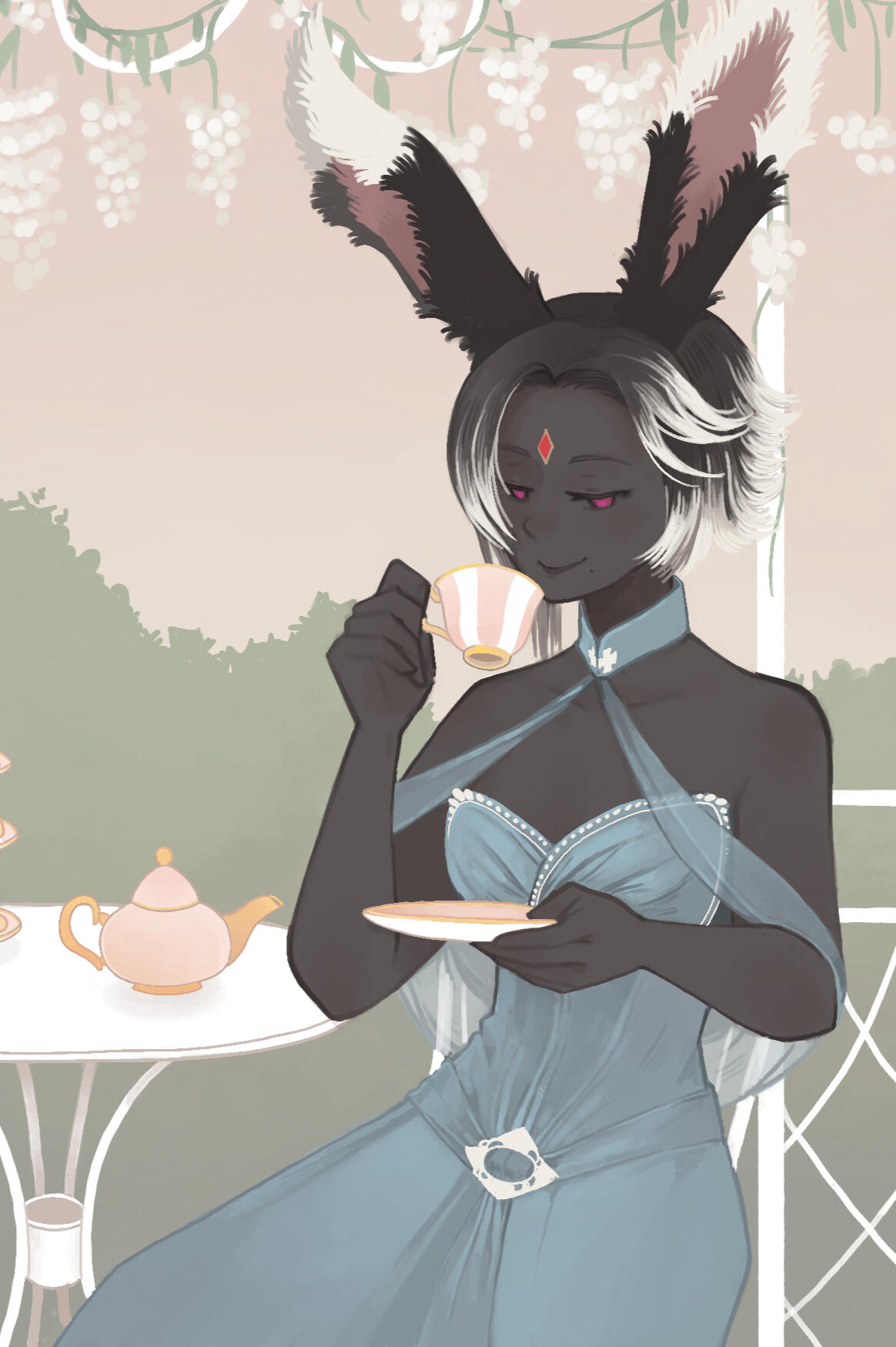
The Lullaby
╰ Before Love Learned to Hurt.
Queen's earliest memories were of her mother's voice. She could no longer remember the words. Perhaps she had forgotten them somewhere across the centuries, or perhaps they had never mattered quite as much as the melody itself. That remained. Low and gentle, barely louder than the crackling of the hearth, it would carry through their home in the hours before dawn whenever sleep refused to take her. Her mother would sit beside her and sing until the restless child finally surrendered to exhaustion. Sometimes Queen would wake later to find her still there, having fallen asleep herself, one hand resting upon her daughter's blanket.Before she was the Matriarch, before Queen understood what that title meant to everyone beyond their door, she was simply her mother. Their tribe was small, bound together by blood, tradition and the necessity of surviving a world that rarely cared whether they did. Her mother stood at its centre. Others lowered their heads when she passed, sought her judgement when disputes arose and turned to her when sickness, hunger or uncertainty threatened their homes. Queen noticed these things without understanding them. To her, the woman everyone else approached with reverence was the same woman who tied back her hair before meals, corrected the way she held a knife and nudged her aside when she became more obstruction than help while cooking. She could scarcely imagine why anyone would be frightened of someone who laughed so readily at her daughter's attempts to be useful.Queen adored her. She followed her everywhere she was permitted to go, and occasionally where she was not. She watched her mother work and attempted to imitate everything she saw. When her mother trained, Queen found a fallen branch and copied her movements from a distance, often with such enthusiasm that she lost her footing and tumbled into the grass. When she prepared food, Queen insisted upon helping, even when her contribution amounted to little more than making a mess. There were afternoons when her mother would send her to gather firewood, only for Queen to return carrying a bundle so enormous that she could scarcely see over it. Her mother would laugh, take half the burden from her arms and remind her that being strong did not mean carrying everything at once. Queen seldom listened. The following afternoon, she would return with an even larger bundle.Their evenings belonged to quieter things. After the day's work was finished, Queen would settle beside her mother at the hearth, sometimes talking until she was gently reminded that other people might wish to hear themselves think. On other nights she said very little, content simply to rest against her mother's side while the fire burned low. Her mother would occasionally tell her stories of the tribe, of ancestors whose names Queen struggled to remember and distant places she could scarcely imagine. Some were lessons disguised as tales. Others were told for no greater purpose than to entertain a child who had decided she was not yet tired. Queen preferred the latter, particularly when her mother changed her voice to imitate the people within them. She would beg to hear her favourites again, protesting whenever a familiar detail was omitted, until her mother finally declared that even the greatest stories must eventually come to an end.Strength came early to Queen. She grew faster than the other children, first enough to be remarked upon and then enough that comparison became increasingly pointless. Things that exhausted her peers came naturally to her. She could carry more, run longer and strike harder, though precision took considerably more effort. Her mother recognised it before Queen understood there was anything unusual to recognise. At first, training was simply another activity they shared. Her mother taught her where to place her feet and how to distribute her weight. She corrected Queen's grip by wrapping her hands around the girl's own and moving them into position. When Queen fell, she was expected to stand again. When she complained, her mother listened and then told her to continue. There was discipline in it, but never humiliation. A bruised knee was cleaned after the lesson. A mistake was corrected until Queen understood it. Praise was uncommon enough that when it came, Queen carried it proudly for days.She wanted desperately to be strong like her mother. Not stronger, not yet, but simply like her. Queen admired the effortless certainty with which the Matriarch carried herself, the way she could settle an argument without raising her voice and the extraordinary ease with which she wielded weapons that Queen could scarcely lift. Whenever her mother demonstrated something particularly difficult, Queen would insist upon trying it herself. She failed more often than she succeeded, occasionally growing so frustrated that she declared the exercise impossible. Her mother would smile, invite her to watch once more and begin again. Sometimes they remained outside until the evening grew cold, repeating the same movements until Queen finally managed something that had seemed beyond her only hours earlier. She would turn towards her mother immediately, searching for the familiar expression of approval. When it came, no accomplishment in the world seemed quite so wonderful.As the years passed, Queen began to understand what it meant to be the Matriarch's daughter. Her mother's attention was no longer merely affection. Others watched their lessons. They watched Queen growing taller, watched the ease with which increasingly heavy weapons settled into her hands and spoke quietly about what she might become. Queen learned that one day people might look towards her as they looked towards her mother. The thought frightened her. Her mother laughed when Queen admitted it, though there was no mockery in the sound. She drew her daughter close, brushed the hair from her face and told her there was nothing shameful about fear. Courage was not its absence. Strength was what remained when fear had exhausted every argument it could make.Queen remembered that lesson. She remembered many of them. Perhaps that was why she did not notice when they began to change.There was no single morning upon which her mother became someone else. No argument split them apart, nor did some great tragedy announce that the warmth of Queen's childhood had ended. The changes were too small for that. Her mother stopped sitting beside her until she slept, but Queen was older now and told herself she did not need it. Their meals became quieter, but there was more work to be done, more responsibility resting upon the Matriarch and more expected of the daughter who would one day follow her. Queen understood. Training became longer. Queen understood that too.At first, she was almost proud of these changes. Her mother had begun treating her less like a child and more like someone who might eventually stand beside her. Queen welcomed the additional responsibility, even when it meant surrendering the small comforts she had once taken for granted. She no longer interrupted her mother whenever she wanted attention. She learned to wait until the day's work was finished before asking questions that could reasonably wait until morning. When her mother was tired or preoccupied, Queen tried to make herself useful rather than becoming another demand upon her patience. She imagined that such consideration would please her. Occasionally, it did.Yet there were evenings when Queen found herself sitting beside the hearth long after her mother had retired, wondering when they had last shared a story. Sometimes she would remember something amusing from the day and turn instinctively to tell her, only to discover that her mother had already left the room. On other occasions, she would linger after training, hoping that a particularly successful lesson might earn her a little of the attention she remembered. Her mother might acknowledge her progress with a nod before turning to other matters. Queen accepted the praise and told herself that it was enough. She was growing older, after all. There were things she ought to have outgrown.When she fell, her mother stopped offering a hand, and Queen learned to rise without one. When exhaustion made her movements sluggish, the lesson continued until they were precise again. When she failed, her mother no longer told her that failure was part of learning. She simply told Queen to repeat it. Again and again and again. Queen became stronger. She learned to anticipate corrections before they were spoken, to recognise the slightest disappointment in her mother's expression and to continue practising long after the other children had returned home. Her mother had always demanded discipline, but the familiar encouragement that once accompanied it became increasingly difficult to find. Queen told herself that this, too, was part of growing up.She did not resent her mother. How could she? Everything Queen admired about herself had begun beneath that woman's guidance. Her strength, her discipline and the confidence with which she approached challenges that frightened others were gifts her mother had spent years teaching her to cultivate. If the lessons had become more demanding, it was surely because she had grown capable of more. If praise had become rarer, perhaps she had not yet accomplished anything sufficiently impressive to deserve it. Queen resolved to try harder. She wanted to become someone her mother could look upon with the same pride she remembered from childhood, someone worthy of the responsibilities that awaited her.Somewhere along the way, the lullabies stopped.For a long while, she did not notice that either.
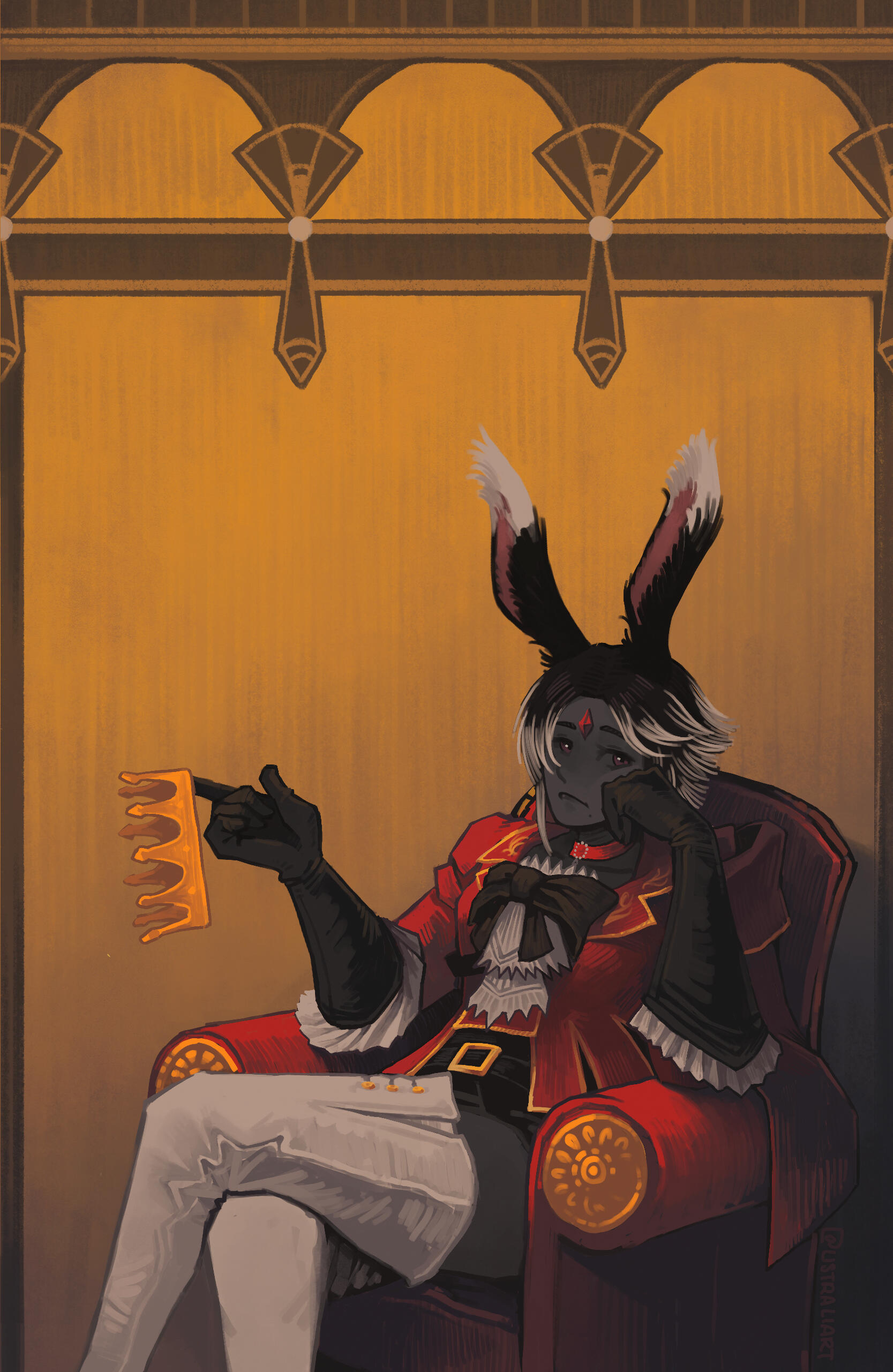
The Matriarch's Daughter
╰ What Hurts You, Shapes You.
The first time her mother struck her hard enough to draw blood, Queen apologised. She had made the same mistake three times. Her footing had been wrong, her weight too far forward, and frustration had made her careless. The blow came across her back before she understood that punishment had begun. Queen stumbled, caught herself and stared at the ground while warmth spread beneath her clothes. Her mother did not shout. That would have been easier to understand. She simply told Queen what she had done wrong and instructed her to take her position again. Queen did. When the lesson ended, her mother cleaned the wound herself. That was how it began.Punishment did not replace affection all at once. It existed beside it, woven so closely into the remnants of their old tenderness that Queen struggled to distinguish one from the other. Her mother could leave her trembling beneath the weight of a lesson and sit with her beside the hearth that same evening. She could inspect a wound she had inflicted, clean it carefully and tell Queen that she had endured well. Sometimes she would brush the hair from her daughter's face exactly as she had when Queen was little. Those moments mattered more now because they had become rare. Queen learned to wait for them. A word of praise could redeem an entire day of pain. A hand upon her shoulder could make the punishment before it feel necessary. Queen never knew when that softness would return, only that it sometimes did, and so she gave her mother every reason she could think of to offer it. She trained harder. She complained less. She learned to swallow pain before it reached her face. Her mother noticed, and the expectations rose with her.Queen's body changed quickly in those years. She had always been tall, but adolescence stretched her beyond what anyone had expected. Weapons made for others began to feel small in her hands. Her strength became something the tribe spoke about openly, and the attention embarrassed her at first. Her mother did not share their surprise. She watched Queen grow with the quiet satisfaction of someone seeing a prediction fulfilled. Where others saw an unusually powerful girl, the Matriarch saw what her daughter might become. It was around then that she placed the axe in Queen's hands.Queen knew it immediately. She had watched her mother carry it since childhood. She had watched that same weapon rise and fall through countless training sessions, had traced its shape from afar before she was old enough to understand why anyone would need something so large. Its broad head bore the marks of years of use, the haft worn smooth where her mother's hands had held it countless times. When her mother offered it to her, Queen hesitated. Her mother told her to take it, and Queen wrapped both hands around the haft. The weight surprised her, though not because she struggled beneath it. She had expected something carried by her mother for so many years to feel different somehow, as though significance possessed weight of its own. Instead, it was simply an axe. Wood beneath her palms, metal at its end, heavy certainly, but manageable. Her mother smiled. Queen remembered that smile for centuries.Training changed after that. The axe demanded discipline that strength alone could not provide. A careless swing carried Queen farther than she intended. Poor footing left her exposed. Anger made her powerful and predictable. Her mother dismantled those weaknesses one after another. Every mistake was answered and every hesitation corrected. Queen learned that pain arrived fastest when she lost control, and so control became instinct. She learned to keep her breathing steady when exhausted, to hold her stance while her muscles screamed for rest and to continue when every sensible part of her body told her to stop. Again and again and again, until movements that had once required concentration became as natural as breathing.There were days when Queen could barely stand afterwards. There were nights when turning beneath her blankets reopened wounds across her back. The older scars had only just begun to fade when new ones crossed them, until eventually there was little untouched skin left to mark. Her mother never struck without explanation. That distinction mattered desperately to Queen. Every punishment had a reason. A dropped guard. A careless movement. A moment of hesitation. An answer given too slowly. Her mother could always tell her precisely what she had done wrong, and Queen clung to that certainty. If she could identify the mistake, then the pain possessed logic. If the pain possessed logic, then it could be prevented. If it could be prevented, then the fault was hers.So Queen became better. She learned quickly because mistakes had consequences. Her movements grew precise. Her breathing remained controlled even through exhaustion. She stopped flinching when her mother approached after a failure, knowing that anticipation accomplished nothing except prolonging the moment before the blow arrived. Eventually, she stopped crying altogether. Her mother praised her for that, and Queen treasured the praise far more than she resented what had been required to earn it.The tribe watched the Matriarch's daughter become something formidable. Queen noticed the way conversations quietened when she approached and the distance others began to keep during training. Some admired her. Others feared her. She found both reactions uncomfortable, though she gradually learned not to show it. Her mother told her that leadership was not friendship. A Matriarch who needed to be loved would eventually become a servant to those whose love she sought. Affection changed too easily. Gratitude faded. Loyalty weakened when circumstances became difficult. Respect endured where softer things failed. Queen listened. Once, she might have questioned why respect and affection could not exist together. By then, she had become accustomed to accepting her mother's lessons before she fully understood them.There were other questions she did not ask. Members of the tribe occasionally disappeared for stretches of time. Sometimes they returned. Sometimes they did not. Queen had grown accustomed to absence as a fact of their lives. People hunted, travelled, became sick, left to establish themselves elsewhere or simply chose paths that carried them beyond the tribe. When Queen had been younger, explanations usually followed. As she grew older, her mother became less willing to provide them. There were matters a successor did not yet need to understand. Queen accepted that too. She had become very good at accepting things.What she wanted remained painfully simple. Beneath the height, the strength, the scars and the expectations placed upon her, Queen still wanted what she had wanted as a child. She wanted her mother to look at her and see someone worthy of standing beside her. Every lesson survived brought her closer to it. Every punishment endured proved that she could bear what others could not. Every scar became evidence that she had not disappointed her enough to be abandoned. When her mother praised her, however quietly, Queen felt something within her settle. Those moments became fewer, and their rarity only made her value them more. A single approving glance might sustain her through days of silence. A hand resting briefly upon her shoulder could make the wounds beneath her clothes seem suddenly insignificant.Once, after a lesson that had continued from afternoon until the light had nearly vanished, Queen finally executed a movement she had failed more times than she could count. Her arms shook from exhaustion. Blood had dried beneath her clothes and her palms were raw around the haft of the axe. She finished the movement and waited, expecting another correction. Instead, her mother stepped forward and placed a hand against her cheek. "You will be stronger than I ever was." Queen did not know what to say. For the first time in years, her mother drew her into an embrace.Queen froze before holding her in return. For one impossible moment, the years between disappeared. She closed her eyes and she was small again, sitting beside the hearth while a familiar voice promised that darkness would pass. She could smell smoke in her mother's hair. She could feel the same hand that had once tucked blankets around her resting gently against the back of her head. Queen held her tightly, afraid without knowing why that letting go would make the moment disappear. Her mother released her first, and training resumed the following morning.Queen never asked why love had become something she needed to earn. By then, she had already learned the answer her mother wanted her to understand. If something hurt, endure it. If it broke you, become harder. If you wanted it badly enough, prove that you deserved it. Queen would spend centuries forgetting the words of her mother's lullaby, but she never forgot those lessons.
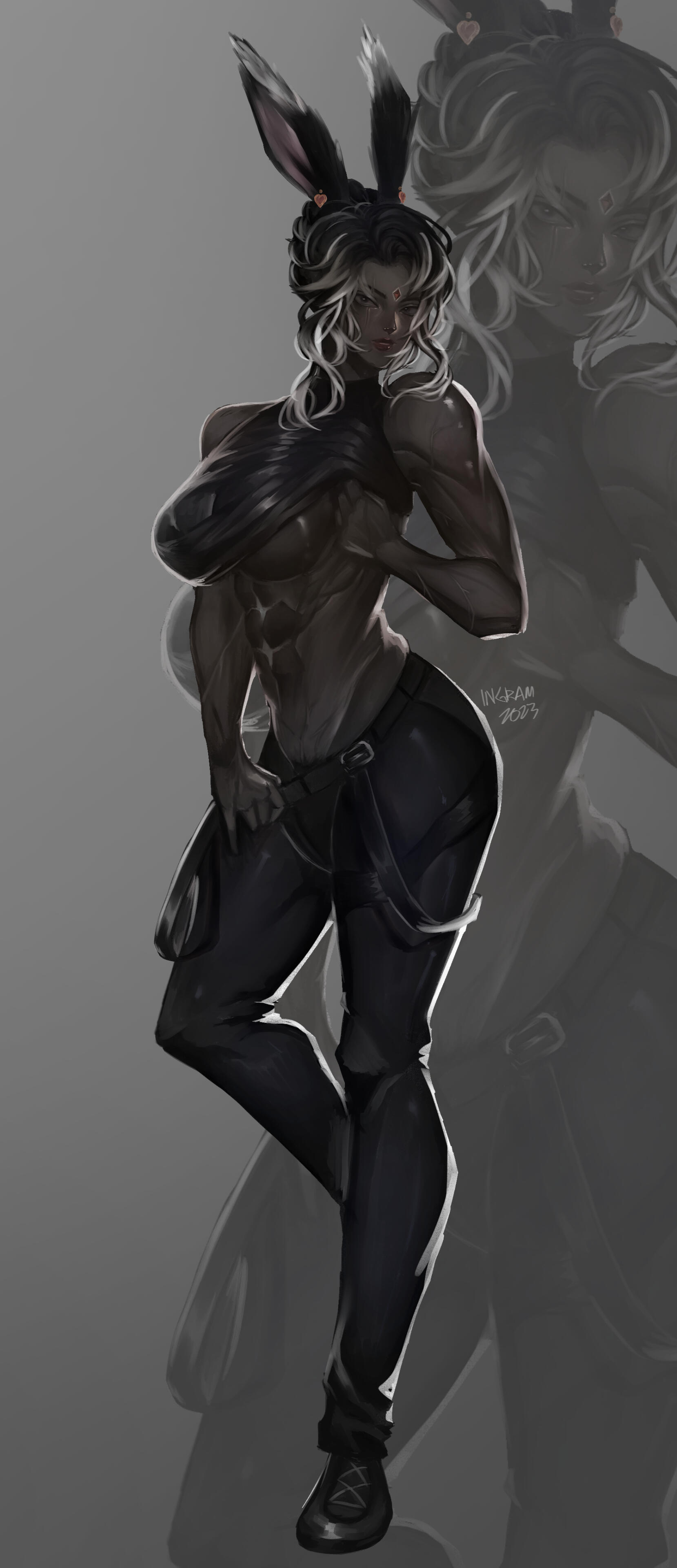
Flesh Remembers
╰ Some Names Never Leave.
Queen had grown accustomed to being recognised before she knew the names of those recognising her. The Matriarch's daughter was difficult to overlook, and by then there were few among the tribe who had not watched her train or heard what was expected of her. Some greeted her with respect. Others avoided her. Queen had learned to accept both without taking either personally, which was why the young woman screaming at her from across the field caught her so completely unprepared. At first, Queen thought she had mistaken her for someone else. The woman crossed the distance between them quickly, shouting a name Queen recognised only after hearing it twice. Her sister. She wanted to know where her sister was. Queen told her she did not know. The answer only made the woman angrier. She accused Queen of lying, accused the Matriarch of taking her, accused them both of knowing exactly what had happened. Queen's confusion gradually hardened into irritation. People left. People disappeared for days or weeks. Some chose not to return. Queen had lived with that reality for most of her life, and grief did not grant this stranger the right to make accusations she could not prove.When Queen told her as much, the woman looked at her with an expression Queen could not immediately understand. It was not fear. There was too much anger for that. Nor was it simply grief. She looked at Queen as though Queen had confirmed something merely by refusing to believe her. For a moment neither spoke. Then Queen turned away. She had neither the patience nor the inclination to defend her mother against accusations built upon nothing more substantial than grief. She told herself that was the end of it. By evening, she had almost succeeded in believing so. Yet the name followed her home. Queen knew the woman being spoken of. Not well, but enough. She remembered seeing her carrying baskets between homes, remembered passing her near the edge of the settlement and remembered once watching her laugh at something Queen had not heard. These were insignificant memories, the sort accumulated simply by living beside someone for years. Queen tried to remember when she had last seen her and discovered that she could not. A month ago, perhaps. Longer. There had been no farewell that Queen remembered, though there was no reason anyone owed the Matriarch's daughter an explanation before leaving. She reminded herself of that several times.Still, the question remained, and Queen began noticing absences. Not because there were suddenly more of them, but because for the first time she counted. A hunter who had supposedly travelled beyond their territory had never returned. An older woman Queen remembered from childhood had disappeared sometime during the previous winter. There had been others over the years, faces that simply stopped appearing until eventually nobody mentioned them anymore. Queen searched her memory for explanations and found fragments. Someone had left. Someone had become ill. Someone had gone hunting. Someone had chosen another life elsewhere. Each answer remained perfectly reasonable when considered alone. It was only when Queen placed them beside one another that she realised how many explanations there had been. She hated herself for doing it. Suspicion felt like betrayal. Her mother had led these people for longer than Queen had been alive. She had settled disputes, rationed food during lean seasons, tended wounds, buried the dead and carried responsibilities Queen was only beginning to understand. Queen had watched her sacrifice comfort for the tribe countless times. To allow the accusation of one grieving woman to outweigh a lifetime of evidence seemed childish. Worse, it seemed ungrateful.Her mother had given Queen everything she possessed. Strength, discipline, purpose, the axe she now carried as naturally as another limb. Even the scars across Queen's back had been given meaning. She had survived every lesson because her mother had known she could. Queen told herself she trusted her, and then she began listening. Conversations ended when she entered rooms. She had noticed that before and attributed it to the same unease her size and position had inspired for years. Now she wondered what had been said before she arrived. She watched the way people behaved around her mother and found herself unable to decide whether what she saw was reverence or fear. She began asking small questions disguised as ordinary conversation. When had someone last seen the missing woman? Had she spoken of leaving? Had she taken anything with her? The answers were vague. Nobody seemed willing to say that anything was wrong, yet nobody could tell Queen where she had gone.Her mother noticed the questions, though she did not confront Queen immediately. For several days nothing changed. Training continued. Meals were taken in the same silence to which Queen had become accustomed. The Matriarch spoke of ordinary things and Queen answered as she always had, though now every pause seemed deliberate. Queen began noticing how easily her mother controlled a conversation, how seldom she offered more information than necessary and how naturally questions seemed to end when the Matriarch decided they had been answered. These were qualities Queen had once admired in her. Now, for the first time, they made her uneasy. Eventually her mother asked why she had become so interested in people who had chosen to leave. Queen told her about the woman in the field. Her mother listened without interruption. When Queen finished, she dismissed the accusation with such ease that Queen felt embarrassed for having entertained it at all. Grief required somewhere to go, she explained, and those who could not endure uncertainty often transformed it into blame. The missing woman had left. Her sister had refused to accept it. There was nothing more complicated than that.Queen wanted that answer, and she accepted it because she wanted it. For several days afterwards, she stopped asking questions. The discomfort remained, but she forced herself to treat it as shame rather than suspicion. She trained until exhaustion left little room for thought. She reminded herself who her mother was. She remembered the hearth. She remembered hands guiding hers around the grip of a weapon. She remembered wounds cleaned after punishment and the rare warmth of an embrace. When doubt returned, Queen treated it as she had been taught to treat pain. She endured it until it became quiet.Then, before dawn one morning, Queen woke to singing. For a few moments she did not move. The melody travelled faintly through the house, softened by walls and distance, but Queen knew it before she was fully awake. Centuries later she would forget most of its words. That morning she remembered every one. It was her mother's lullaby. Something old and instinctive moved through her before suspicion had time to return. For the briefest moment she was a child again, awake in darkness and waiting for her mother to come sit beside her. The familiarity of it hurt in a way Queen did not understand. She had not heard that song in years. She had not realised how completely she had missed it until it returned. She remained there listening, afraid that movement might somehow disturb the melody and make it disappear again. Her mother continued singing, and eventually Queen rose to follow the sound.The door to the Matriarch's chamber was not locked. Queen pushed it open and found her mother seated upon the floor. At first, what she saw refused to arrange itself into anything she could understand. There was blood, too much of it to dismiss, though her mother showed no sign of panic. She was bare-skinned, her body marked from shoulder to thigh in lines Queen had never seen before. Symbols curved across flesh in deliberate patterns, some old enough to have scarred and others freshly opened. A sharpened piece of bone rested between her fingers. She dipped its point into the blood gathered beside her and drew it slowly through her own skin, her voice never wavering as Queen stood in the doorway and listened to the lullaby while her mother carved another symbol into herself. The Matriarch looked up. There was no surprise in her face, and Queen could not decide which frightened her more.Queen's gaze returned to the markings. They were not decoration. She recognised fragments of old ritual language among them, pieces of traditions she had been taught but never permitted to study completely. She stepped closer despite every instinct telling her not to. Names appeared between the symbols. Some Queen did not know. Others she did. One of them belonged to the sister of the woman from the field. The questions she had forced into silence returned all at once. The hunter. The old woman. The people who had left without farewells, possessions, explanations or graves. Queen began finding their names upon her mother's body. Some had been carved years ago. Others were newer. Each had been preserved in flesh long after the tribe had stopped speaking them aloud. Her mother lowered the bone and regarded her daughter with the same composure she had carried through every lesson Queen had ever endured. There was no attempt to hide herself, no hurried explanation and no shame in having been discovered. "It must be remembered," she said. "Not with breath, but with flesh."Queen understood. Not everything, not yet. She did not know how long it had been happening, what first compelled her mother to begin or how many lives had been taken. Those answers would come later. What Queen understood in that moment was simpler and far worse. The tribe had not been dwindling through misfortune. The missing had not simply left. Her mother had been extending one life by shortening others, preserving herself through rituals paid for in the blood of those who trusted her. The woman in the field had been right. Her sister had never left. Queen looked at the woman seated before her and searched desperately for her mother. She found only the Matriarch.
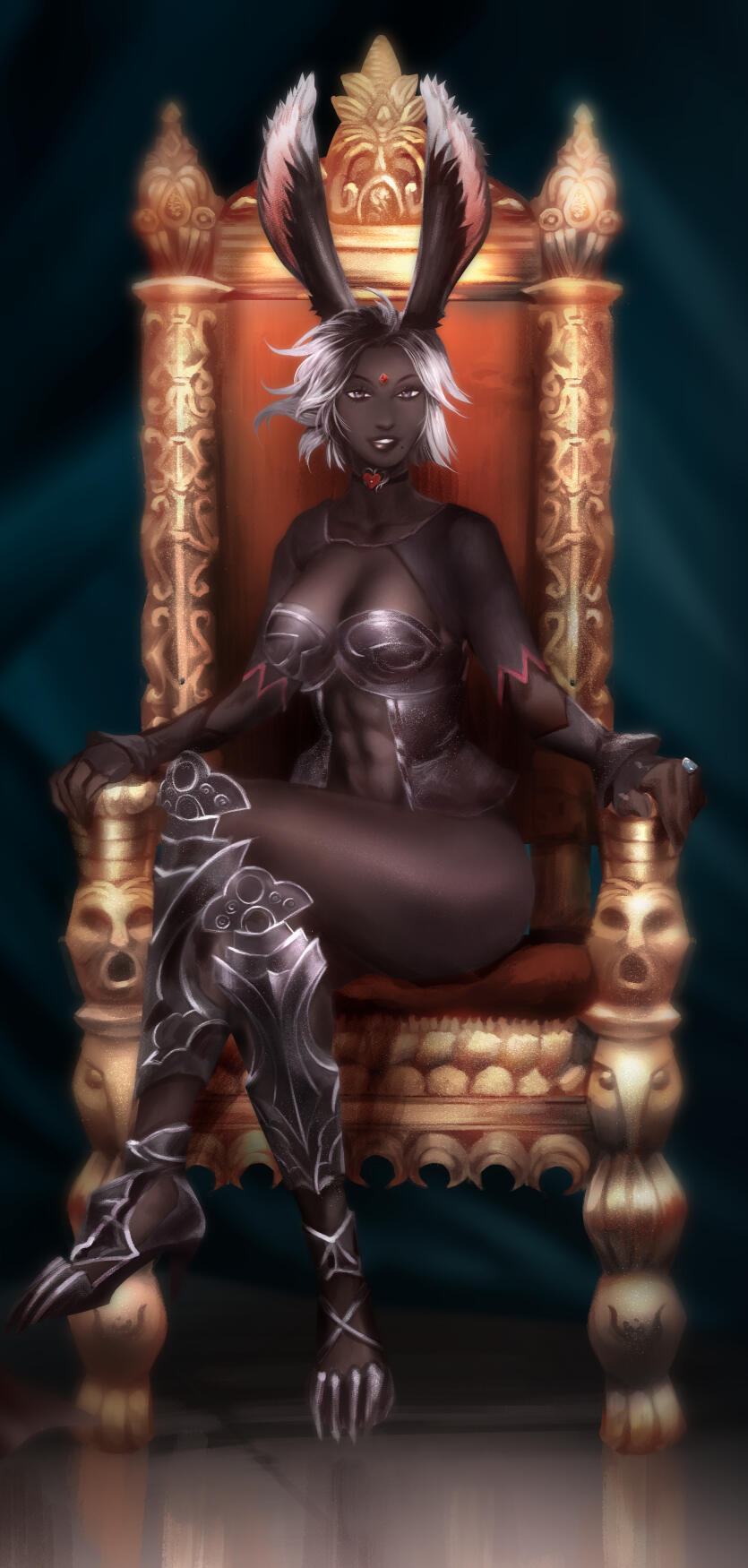
Inheritance
╰ You Already Are Me.
Her mother did not deny it. That was the first thing Queen could not forgive. She had expected something, though she could not have said what. An explanation, perhaps, or some desperate attempt to make what she had discovered less monstrous than it appeared. She would even have accepted a lie. Instead, the Matriarch cleaned the sharpened bone between her fingers, covered herself and began explaining the truth with the same patience she had once used to correct Queen's footing. The markings were older than Queen had realised. Some had been carved before her birth, others added throughout her childhood, each name belonging to someone whose life had been surrendered so that the Matriarch's own might continue. The ritual was ancient, though whether it had belonged to their tribe or had merely been discovered by one of its leaders long ago was something even her mother could not say with certainty. What mattered was that it worked. Life could be taken, reshaped and bound to another. Not perfectly and never without cost, but enough. The years still touched her mother, only far more slowly than they should have. Queen had spent her entire life believing the woman simply aged well. Now she understood that every year preserved in her face had been purchased from someone else.Queen asked how many. Her mother did not answer immediately, and that hesitation told Queen more than any number could have. She asked again. The Matriarch told her that counting them served no purpose. They were dead regardless, and reducing necessity to arithmetic would neither honour them nor bring them back. Queen stared at the names carved across her mother's flesh and wondered how many she did not recognise because their owners had vanished before she was old enough to remember them. She thought of the woman in the field demanding to know where her sister had gone. She thought of all the explanations she had accepted because accepting them had been easier than doubting the person who gave them. Her anger arrived slowly. Horror had come first, then disbelief, then the desperate hope that some missing piece might rearrange everything into something she could understand. When none came, anger settled into the space they left behind.The Matriarch did not ask for forgiveness. She spoke instead of responsibility. Their people had survived because someone had been willing to make decisions others could not. Leadership was not measured by kindness but by endurance, and there were burdens that could not be entrusted to someone whose life might end before the work was finished. A Matriarch accumulated knowledge, alliances, debts and obligations over decades. To lose all of that whenever age claimed a leader was wasteful. Queen listened in silence as her mother explained death as though it were merely another resource to be managed. Those who had been chosen were not taken without consideration. Some were weak. Some were troublesome. Some had little family. Others had reached an age where their usefulness to the tribe had diminished. There had even been those, her mother claimed, whose deaths prevented greater suffering. Every life had been weighed against what its loss could provide, and the Matriarch had always chosen what she believed would preserve the whole.That was when Queen understood the true obscenity of it. Her mother believed every word. There was no hidden cruelty waiting to be confessed, no pleasure taken in the deaths and no secret madness Queen could blame in place of the woman she had loved. The Matriarch had not sacrificed her people because she hated them. She had done it while believing herself their protector. She had watched children grow, shared meals with their families, settled their disputes and listened to their grief, all while knowing that any one of them might eventually become useful in another way. Queen asked whether they had known what was being done to them. Her mother told her that knowledge would only have frightened them. Queen asked whether any had been given the choice. The Matriarch's expression changed then, not with shame but disappointment, as though Queen had asked something beneath the intelligence she had spent years cultivating. People rarely chose what was necessary when necessity demanded their own suffering.Queen thought of every lesson she had endured. Every time she had been told to stand again. Every wound her mother had inflicted and later cleaned. Every moment of affection that had followed pain closely enough for Queen to mistake one as justification for the other. For the first time she wondered whether any of it had truly been about making her strong. The thought hurt more than she expected. She asked why she had been trained so relentlessly, why she had been taught to endure things no child should have been required to endure and why her mother had spent years preparing her to lead people who were apparently little more than lives waiting to be spent. The Matriarch's answer was simple. Because one day Queen would inherit all of it.The ritual had always been intended for her. Her strength had made her an exceptional successor, but strength alone would eventually fail. Flesh weakened. Reflexes dulled. Memory vanished. Death took everyone in the end unless someone possessed the will to refuse it. Her mother had intended to teach Queen when she was ready, just as previous knowledge had been passed from one Matriarch to another. The scars, the discipline, the insistence upon enduring pain had prepared her for more than leadership. The ritual itself demanded suffering from the one who carried it. Flesh remembered what ordinary memory could not. Names were carved because they could not be permitted to disappear, and the pain ensured that every life taken remained part of the person who benefited from it. Her mother spoke of this as though it were reverence. Queen looked at the scars covering her body and saw only a graveyard.She refused. The word came more easily than anything had since she entered the room. Her mother regarded her for a long moment before asking whether Queen truly believed herself above what had been done for her. Queen told her that none of it had been done for her because she had never asked for it. The tribe had never asked for it either. Whatever life her mother had purchased belonged to the people buried beneath it, and Queen wanted no part of an inheritance built from their deaths. For the first time, the Matriarch's composure began to fracture. Not into rage, but into something Queen found worse. Pity. She looked at her daughter as though Queen were still a child struggling with a lesson whose answer should have been obvious."You think refusing makes you different from me."Queen tightened her grip around the axe.Her mother looked at the weapon and then back at her. "You already are me."Queen hated her for saying it. She hated the certainty with which it was spoken and the quiet familiarity of the voice that delivered it. She hated that some part of her still wanted her mother to take the words back, to become the woman beside the hearth again and tell Queen that there had been some terrible misunderstanding. Most of all, she hated the suggestion that everything done to her had succeeded. The scars, the punishments, the lessons about strength and fear and the worthlessness of softness had not made Queen into her mother. She would not permit them to. Whatever else she became, she would choose it herself.The Matriarch made no attempt to flee. Perhaps she believed Queen incapable of killing her. Perhaps she had simply known her daughter well enough to understand that once Queen decided upon something, pleading would accomplish nothing. Queen never learned which. There was no great battle between them, no final contest between master and student. Her mother had taught her too well for that. Queen stepped forward, set her feet exactly as she had been taught and swung the axe once. The blade passed through flesh and bone with terrible ease. The woman who had taught Queen how to hold that weapon died by the precision she had spent years cultivating in her daughter.Queen remained there long after the room became silent. Anger did not disappear with her mother's death. Neither did love. That surprised her most. She had imagined, perhaps foolishly, that discovering the truth would destroy everything that had existed before it. Instead, the memories remained exactly as they had been. Her mother had still sung to her when she could not sleep. She had still laughed when Queen returned carrying too much firewood. She had still wrapped her hands around Queen's own and taught her how to hold a weapon. Those moments had been real. So were the scars across Queen's back. So were the names carved into her mother's flesh. One truth did not erase another, and Queen discovered that hatred was considerably easier when it did not have to share space with love.She buried her mother herself. There was no ceremony and no marker. Queen would not grant the Matriarch the honour afforded to those she had sacrificed, nor would she leave the task to people who did not yet know what their leader had done. Afterwards she told the tribe enough of the truth that they understood why the woman who had governed them for so long was dead. Some believed her immediately. Others did not. A few wept. Some demanded proof, while others seemed to have suspected enough over the years that confirmation brought little surprise. Then came the question Queen had expected and dreaded. Who would lead them now?They looked to her because that was what they had been taught to do. She was the Matriarch's daughter, trained since childhood to inherit everything her mother possessed. The axe was hers. The strength was hers. The knowledge, at least what remained of it, could have been hers as well. Queen looked at the people waiting for her answer and felt the shape of the life prepared for her closing around her throat. She had killed her mother because she refused that inheritance. Taking her place would merely complete it by another path. Queen told them to choose someone else.She left soon afterwards. There was little ceremony in that either. She carried what she needed, took the axe and walked away from the only home she had ever known. Near the edge of the settlement she encountered the woman who had confronted her about her missing sister. Queen stopped. For a moment she considered telling her everything, though there was little left to tell that the tribe would not soon know. The woman's expression changed when she saw the axe and the blood Queen had not completely managed to clean from it. Understanding seemed to pass between them without either giving it words. Queen could not return her sister. She could not offer an apology large enough to contain years of ignorance, nor did she believe forgiveness was hers to request. The woman stepped aside, and Queen continued walking.She did not look back. For the first time in her life, there was nobody ahead of her deciding where she should place her feet. No lesson waited to be completed, no approval to be earned and no inheritance she was obligated to accept. The world beyond the tribe was enormous, uncertain and entirely her own. Queen believed she had escaped her mother's design. She believed killing the Matriarch had severed whatever chain had bound them together. Queen would live long enough to learn otherwise.
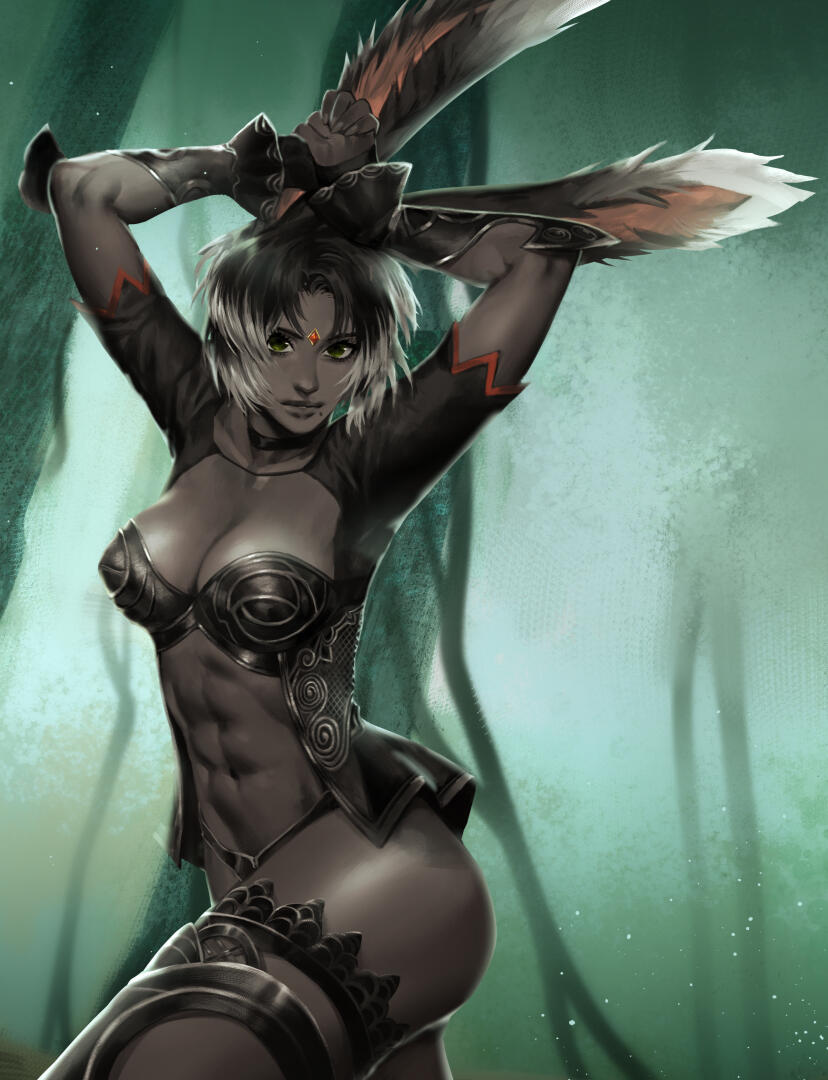
The Flood of Light
╰ When All Else Is Gone, Endure.
Queen wandered for years after leaving the tribe. At first, she expected freedom to feel different. She had imagined something immediate, some great release that would come from waking each morning without her mother's expectations waiting for her. Instead, there was only choice. She could travel north or south. She could remain somewhere for a night or a season. She could speak to those she encountered or pass them without a word. Nobody corrected her decisions. Nobody demanded that she justify them. For the first time in her life, there was no path prepared for her, and Queen discovered that she preferred it that way. The uncertainty that might once have frightened her became something she guarded fiercely. If she made a mistake, it belonged to her. If she suffered for it, the suffering belonged to her as well.She learned quickly that strength translated easily beyond the borders of her old home. The world contained no shortage of people willing to pay someone capable of violence, and Queen was very capable indeed. She guarded caravans when their routes interested her, hunted creatures that had grown too bold near settlements and occasionally accepted work from those who needed another person found, frightened or killed. She was never particularly interested in the morality others attached to such things. People had an extraordinary talent for describing their own interests as righteous, and Queen had little patience for deciding whose justification sounded noblest. She chose according to simpler measures. Whether the work interested her, whether the payment was worthwhile and whether accepting it interfered with something she wanted more.Violence came easily. That did not mean she loved it, at least not then. Fighting was simply one of the few things in which Queen possessed absolute confidence. Her mother had spent years ensuring hesitation was beaten out of her, and the world beyond the tribe rewarded the result. Queen became accustomed to people underestimating her until they saw the axe move. Her size made subtlety difficult, but subtlety was rarely necessary when an opponent understood within moments that they could not overpower her. Stories accumulated wherever she stayed long enough for people to remember her. Some exaggerated her strength. Others exaggerated her cruelty. Queen corrected neither. Reputation was useful, particularly when it ended conflicts before she needed to participate in them.The years continued, and eventually Queen realised they were treating her strangely. People she had known as children grew into adults. Adults grew old. Faces she remembered disappeared and were replaced by their descendants, while Queen herself changed so slowly that at first she mistook the difference for vanity. She had expected to be long-lived. Her people were not creatures of brief lives, and a decade could pass without demanding much thought. Several decades were harder to dismiss. Queen watched age settle upon people who had once seemed little different from herself while her own reflection remained stubbornly familiar. There were changes, certainly, but not enough. Whatever should have been happening to her body was happening at a fraction of the expected pace.For a time, she feared her mother had succeeded after all. The possibility disgusted her enough that she spent years searching for evidence of the ritual within herself. She found none. There were no names carved into her flesh beyond the scars her mother had already left there, no rites she had unknowingly completed and no lives Queen could identify as having been exchanged for her own. Her mother had never performed the ritual upon her. Of that, Queen eventually became certain. Why she aged as she did remained unanswered. Perhaps there had always been something unusual about her. Perhaps whatever made her grow so tall and strong had altered other parts of her as well. Queen considered the mystery for a while and eventually stopped caring. She was alive. That was sufficient.Longevity changed the way she understood attachment. Queen was not incapable of affection, nor did she avoid others simply because she expected to outlive them. She enjoyed company when it pleased her and occasionally remained somewhere because a particular person gave her reason to. There were friendships, lovers and people whose presence she genuinely valued. Some relationships lasted years. A few lasted decades. Queen did not pretend their eventual endings meant nothing to her, but neither did she allow grief to transform loss into obligation. People died. People left. People changed. Queen continued. She had learned very young that permanence was something others promised more often than they could provide, and the centuries only made that lesson easier to accept.The world itself proved no more permanent. The first signs were easy to misunderstand. Rumours travelled before certainty did, carrying stories of lands consumed beneath impossible brilliance and creatures twisted into things that should not exist. Queen had heard prophecies before and possessed little patience for them. Every frightened village believed its disaster heralded the end of the world. Every generation produced someone convinced they had been chosen to witness the last days. Queen continued travelling until the evidence became too large to dismiss. Light spread across the sky and refused to leave. Darkness retreated. Night itself began to disappear.Then came the Flood.There was no fighting it. Queen understood that sooner than many. Strength meant nothing against something that swallowed horizons. The axe that had killed beasts and people alike could not cleave the sky, and endurance meant little if she planted her feet before a force capable of erasing everything beneath them. So Queen did what survival required. She moved. Settlements vanished behind her. Forests she had crossed years before were consumed. Roads ended in walls of radiance. The world she had spent so long exploring collapsed piece by piece into a shrinking collection of places that had not yet been taken.People begged her for help. Queen helped when doing so did not endanger her, and sometimes even when it inconvenienced her, but she refused to mistake ability for responsibility. Her strength did not make every frightened stranger her burden. She could not save everyone, and she saw no virtue in dying beside people simply because they could not save themselves. That distinction horrified some. Others understood it only when desperation forced them to make the same choices. Queen did not judge either response. Survival stripped philosophy down very quickly. People who had spent their lives speaking of sacrifice often discovered limits when the sacrifice became their own.Once, along a road already whitening beneath the approaching Light, Queen encountered a family struggling with an overturned cart. One of its wheels had shattered. Their belongings were scattered across the road, and the parents were attempting to salvage everything while two children watched the horizon. Queen told them to leave the cart. They refused. Everything they owned was inside it. Queen told them again that none of it would matter if the Flood reached them. The father asked for her help repairing the wheel. Queen looked towards the growing brilliance behind them and told him there was no time. She could carry one of the children if they moved immediately. Perhaps she could carry both. The parents continued arguing over what could be saved until Queen stopped listening. She took the children because they were willing to come. Their mother followed moments later. Their father remained with the cart.Queen never learned what became of him.The children cried for miles. Their mother hated Queen for leaving him, though she had ultimately done the same. Queen accepted the hatred without argument. There was nothing she could say that would make the choice kinder. The man had been given an opportunity to survive and had chosen something else. Queen would not surrender her own life to honour that decision. Years earlier, perhaps she would have wondered whether this made her cruel. By then, she understood that cruelty and necessity were not opposites, and that something did not become wrong merely because another person suffered from it.The Flood eventually stopped, though calling what remained a world felt generous. Norvrandt endured as a fragment surrounded by devastation, its people crowded into what little land the Light had spared. Queen survived with them. She watched settlements swell with refugees, watched strangers build homes beside people whose nations had once meant something and watched old divisions become increasingly absurd beneath a sky that no longer darkened. People adapted because the alternative was death. They planted crops beneath endless light. They rebuilt walls. They established markets, argued over property, fell in love, raised children and found reasons to complain about lives they had once been grateful merely to retain. Queen found something almost admirable in that. The world had ended, and within years people were once again irritated by their neighbours.Queen endured as she always had. She fought when there was reason to fight, travelled where travel remained possible and learned the shape of what was left. Yet the surviving world felt smaller with every passing year. Roads she had once followed into distant lands now ended at the boundaries of existence. Places preserved in her memory had become unreachable except through recollection. For someone who had built her freedom upon the certainty that she could always walk elsewhere, Norvrandt began to feel less like a refuge and more like a room whose walls she had finally noticed.Restlessness returned. Queen had survived her mother. She had survived the loss of her home, the passing of generations and finally the destruction of almost everything she had ever known. Survival had once been the lesson forced upon her. Somewhere along the way, it had become the one lesson she never needed to question. Whatever the world took from her, Queen remained. When there was nowhere left to go, she would simply have to find somewhere the world had not yet taught her how to reach.
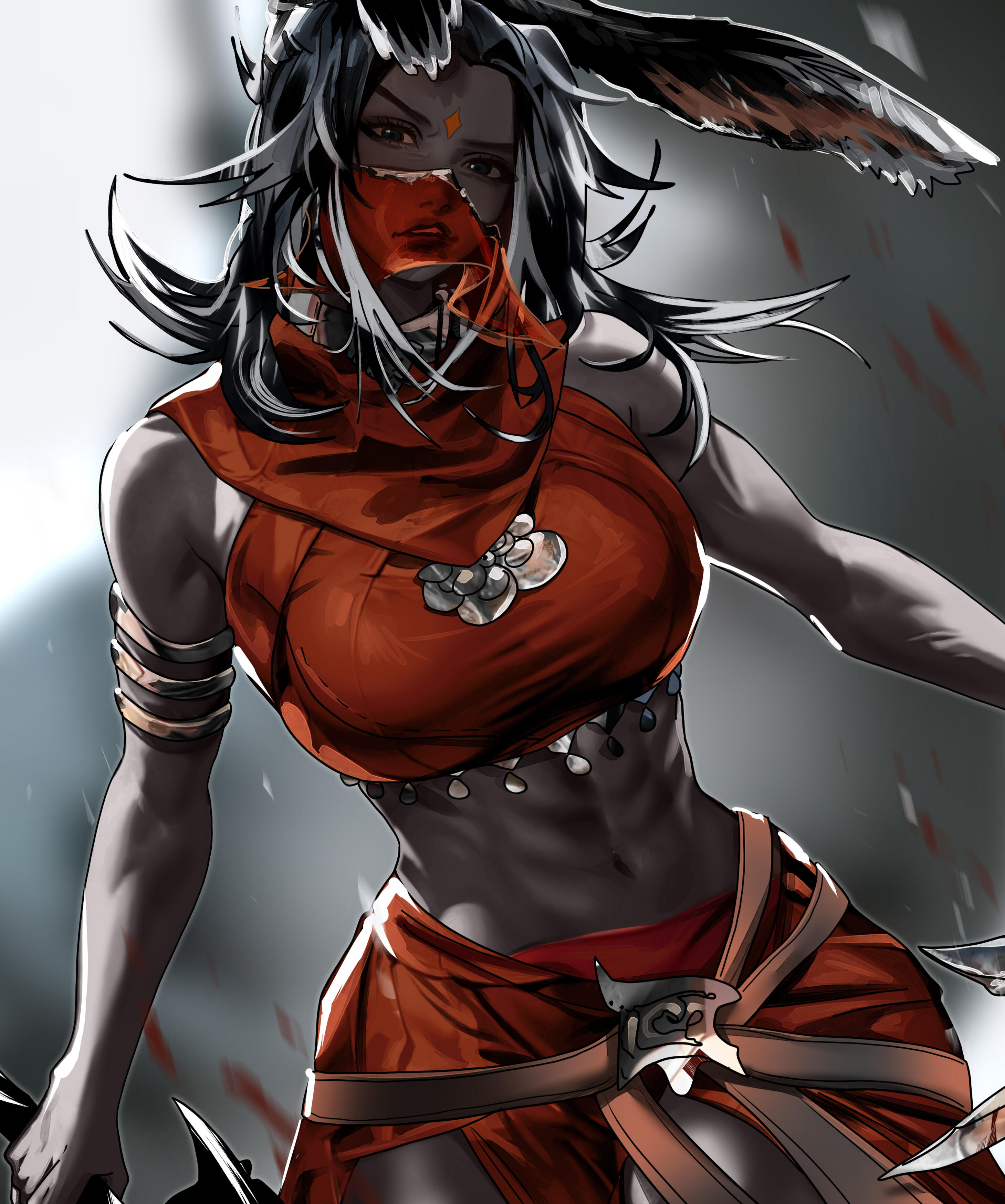
A World Beyond
╰ Where No One Knows Her Name.
For years after the Flood, Queen believed what remained of Norvrandt was all that remained of existence. The world had been reduced to a handful of surviving lands beneath an endless sky, and there seemed little reason to imagine anything beyond them. Then she began hearing stories. At first they were little more than fragments, old theories preserved in forgotten books and half-understood accounts repeated by people who considered them myths. They spoke of worlds beyond their own, reflections born from something older and greater than any civilisation Queen had known. Most dismissed such things as the speculation of scholars with too much time and too little evidence. Queen might have done the same once. After watching most of her world disappear beneath a sea of Light, she had become considerably less certain about what was impossible.Curiosity became obsession slowly. Queen sought out anyone who claimed to know something of these other worlds, though most could offer little beyond theories repeated from someone else. She found old texts whose authors disagreed with one another, listened to explanations she only partly understood and followed rumours that frequently ended in disappointment. The details mattered less than the possibility itself. Somewhere beyond the ruined boundaries of her world there might be another place untouched by the Flood, another horizon that did not end in Light. Queen had spent too much of her life walking wherever she pleased to accept that existence itself had finally provided a wall she could not cross.How she eventually crossed it was something Queen never explained with any consistency. On the rare occasions she spoke of the journey at all, the details changed according to her mood and how much she liked the person asking. Sometimes she claimed to have found a forgotten ritual buried within the work of scholars who had died long before the Flood. At other times she suggested that someone had helped her, though she never provided a name. Once, when particularly irritated by the question, she said she had simply walked until the world ran out and kept going. Whatever the truth, the attempt should probably have killed her. Perhaps several attempts nearly did. Queen had survived worse things than failure, and eventually the impossible ceased being so.She emerged into a world that looked frustratingly ordinary.That was her first impression of the Source. After years spent imagining what another reflection might contain, Queen had perhaps expected something more dramatic than trees, mountains, roads and people complaining about much the same things people had complained about in Norvrandt. The stars were different. The night was not. Queen stood beneath darkness for the first time in longer than she cared to calculate and discovered that she had forgotten how complete it could be. She remained outside until dawn simply because she could. The return of sunlight irritated her more than she expected.The Source fascinated her despite its familiarity. Nations rose and quarrelled over borders. Merchants cheated one another. Nobles convinced themselves their blood made them interesting. People worshipped gods, feared monsters and built walls against enemies who usually turned out to be other people. Queen travelled through as much of it as circumstances allowed, rarely remaining anywhere long enough to become more than a story told after she left. Her height ensured anonymity never lasted long in the immediate sense, but there was a difference between being noticed and being known. People stared at her, certainly. They whispered. Some approached out of curiosity and others wisely chose not to. Yet none knew who her mother had been. None knew the tribe she had abandoned, the people whose names had been carved into another woman's flesh or the world Queen had watched disappear. Nobody expected her to inherit anything. Nobody looked at her and saw the Matriarch's daughter.Queen discovered that she liked being unknown.For most of her life, identity had been something other people attached to her. Daughter. Successor. Warrior. Survivor. Even the reputation she accumulated during her wandering years had followed her from settlement to settlement once enough stories travelled ahead of her. On the Source, none of those things mattered unless Queen chose to reveal them. She could give someone her name and nothing else. If they asked where she came from, she could lie. If they asked about the scars across her back, she could tell them to mind their own affairs. Her past had not vanished, but for the first time it belonged entirely to her. She alone decided who was permitted to know it.Eventually her wandering brought her to Ishgard. Queen had not intended to remain. The city was cold, rigid and so thoroughly convinced of its own importance that she found it amusing almost immediately. Its people arranged themselves according to blood and title, wrapped ancient grudges in ceremony and treated suffering as though enduring enough of it might somehow make them virtuous. There was something familiar in that philosophy, though Queen had little interest in examining why. Ishgard was also accustomed to warriors, scars and people who preferred not to discuss where they had acquired either. For a woman who attracted attention simply by entering a room, it proved surprisingly easy to disappear into the city in every way that mattered.A temporary stay became a longer one. Queen found work when she wanted it and discovered that Ishgard offered enough violence to keep someone of her talents occupied. She hunted when asked, guarded when sufficiently compensated and occasionally accepted work that polite society preferred to arrange through quieter channels. The axe remained with her. Its history had long since ceased to trouble her every time she touched it. Once it had belonged to her mother. Now it belonged to Queen, and that distinction was enough. She maintained it carefully, replaced what age and use demanded and ignored questions about where something so enormous had come from.Time continued behaving strangely around her. Years passed and Queen scarcely changed. Decades made the difference impossible for others to ignore. People she had known aged while she did not, and rumours began to accumulate. Some assumed magic. Others suspected a curse. A few decided she was lying about her age, which Queen generally found the least interesting explanation. She rarely corrected anyone. The truth was that she still did not possess an answer herself. Whatever preserved her was not her mother's ritual, and after so long she had ceased feeling particularly entitled to an explanation. Mortality remained real enough. Queen could bleed. She could be wounded. She knew perfectly well that something sufficiently determined could kill her. Age simply seemed reluctant to attempt it.Her appearance became increasingly difficult to separate from the stories surrounding her. Queen stood nearly twelve feet tall, a height that transformed even ordinary movement into something imposing. Her skin was dark as charcoal, marked by centuries of violence and survival. Burns covered much of her right arm and left leg, while an old arrow wound remained upon her shoulder and the scars across her back preserved lessons she no longer needed. Her hair, black and white, fell around features that had changed remarkably little across generations. Dark green eyes regarded most things with an unsettling steadiness. Queen made no effort to appear harmless. She had spent too much of her childhood being shaped according to another person's expectations to waste adulthood making herself smaller for the comfort of strangers.People reacted to her in predictable ways. Some were intimidated. Some were fascinated. A surprising number were both. Queen gradually discovered that fear did not always drive people away. Sometimes it drew them closer. There were those who liked the uncertainty of standing beside something dangerous, particularly when they believed that danger had chosen not to harm them. Others sought structure, authority or someone willing to make decisions they were tired of making themselves. Queen understood such desires better than they realised. She had spent her childhood craving approval from someone whose affection became increasingly difficult to earn. She knew the power contained within a rare word of praise, a gentle touch after pain and the simple relief of being told that one had finally done well.At first, Queen used that understanding almost without thought. She had always been commanding, and people either accepted that quality or removed themselves from her company. Those who remained quickly learned that Queen's attention could be difficult to obtain and unexpectedly rewarding once given. She could be affectionate when she wished. She could listen. She could offer protection, companionship and a degree of tenderness that surprised people who had judged her solely by appearance. None of it was necessarily false. Queen was perfectly capable of liking someone, desiring them or taking genuine pleasure in their happiness. Affection had never been the part of her mother's example that Queen rejected.What interested her was how easily affection could become leverage.A person who wanted nothing from Queen could not easily be controlled by her. A person who wanted her approval was different. Queen began noticing how quickly behaviour changed when warmth was given selectively. Praise offered rarely acquired greater value. Disappointment could accomplish what threats could not. A hand withdrawn at the right moment might cause more distress than one raised in anger. Queen recognised these things because she had once lived by them, though recognition did not produce the revulsion it might have in her youth. Her mother had used affection to shape Queen into something chosen for her. Queen saw no reason she could not use the same understanding for purposes of her own.There was an important difference, at least as Queen understood it. She did not require anyone to remain. Those who disliked her could leave. Those who found her expectations intolerable were free to refuse them. Queen did not need their obedience badly enough to chase after people who denied it. This made the obedience of those who stayed considerably more interesting. They knew what she was like, or believed they did, and remained anyway. Some returned after discovering precisely how cold she could become. Others worked harder for a fragment of approval Queen knew she could have given freely. She watched people make themselves anxious over the possibility of disappointing her and discovered that the sight stirred something she had not expected.Queen found these things entertaining.
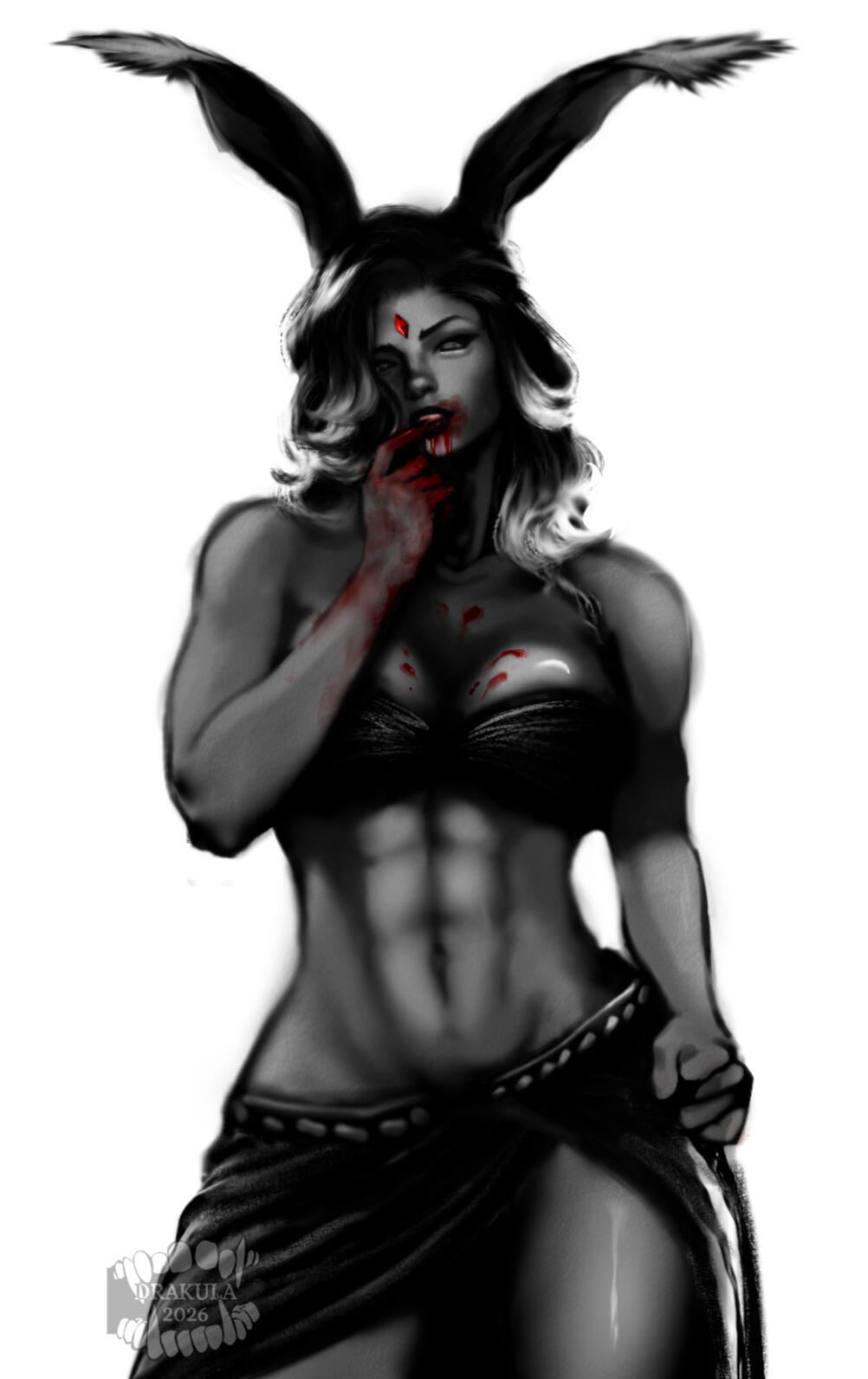
Queen
╰ The Last Sight You'll Ever See.
Centuries passed, and Queen became very good at understanding what people wanted from her. Some wanted protection. Some wanted affection. Others wanted the certainty of being told what to do by someone who would not hesitate after giving the order. Queen could provide all three when it pleased her. She had never struggled with authority, but experience taught her how little force was actually required to exercise it. A raised voice was crude. Threats had their uses, though relying upon them suggested a failure of imagination. People were far more interesting when they obeyed because they wanted something from her, and Queen learned to recognise those desires with remarkable precision. A person who wanted praise could be kept waiting for it. Someone who craved affection could be given just enough to make its absence unbearable. Those desperate to prove themselves required almost nothing from her at all. Queen merely needed to provide the opportunity and watch them exhaust themselves attempting to earn what she could have given freely.Not everyone who came to her misunderstood what they were asking for. Some sought Queen precisely because of her reputation. They wanted severity, dominance and the peculiar safety of surrendering control to someone who would not pretend to be gentler than she was. Queen could accommodate them easily. She enjoyed obedience, particularly when it was freely offered, and found a certain satisfaction in discovering exactly how much another person was willing to endure simply because she had asked it of them. She could be demanding without being careless. She learned people's limits, sometimes more accurately than they knew them themselves, and understood that pushing someone was considerably more enjoyable when they trusted her enough to let her. There were people who flourished beneath that attention. Some remained beside her for years. A few loved her, and Queen was perfectly capable of loving them in return.Love did not make her kind.That distinction confused people more than Queen thought it should. They assumed affection must soften cruelty, as though the two could not comfortably occupy the same person. Queen saw no contradiction. She could hold someone against her at night, remember the smallest details of what pleased them and still enjoy watching them struggle beneath her expectations the following morning. She could soothe the marks she had left upon another person's body without regretting that she had placed them there. Tenderness was not an apology. Affection did not require surrendering authority, nor did love oblige Queen to become harmless. If anything, intimacy made control more interesting. A stranger's fear was simple. The fear of someone who trusted her was far more complicated, particularly when trust ensured they remained despite it.Queen understood hope better than most. She knew what it was to search another person's face for approval and how much weight a single kind word could acquire when kindness was scarce. She remembered the relief of affection after pain, the way suffering could be rearranged into something almost meaningful when the person responsible for it later offered tenderness. Those memories had once disgusted her. With time, Queen discovered they were also useful. She knew how long silence could be allowed to linger before uncertainty became distress. She knew how disappointment could make someone work harder than anger ever would. She understood the extraordinary value people assigned to affection once they feared losing it. Queen did not need to guess at these things. She had learned them from the inside.There were still lines she distinguished clearly in her own mind. Someone who willingly placed themselves beneath her authority had chosen what followed. They could discover that Queen was harsher than expected, regret their decision or leave altogether. Queen might mock them for it, but she rarely wasted effort pursuing someone who genuinely wished to be gone. Dependence bored her when it became absolute. She preferred people capable of standing on their own who nevertheless chose to kneel. Their submission meant something because it was not inevitable, and Queen took considerable pleasure in testing how durable that choice truly was.Yet willingness was never the foundation of Queen's morality. It merely made certain pleasures easier to indulge.The world contained countless people who had offered her nothing and still suffered because of her. Queen could be impatient, vindictive and spectacularly disproportionate when offended. A stranger who insulted her might discover that she did not share the common understanding that words should be answered with words. Someone foolish enough to threaten her could expect even less restraint. Queen had lived too long to regard every life as inherently precious simply because its owner happened to value it. She understood perfectly well that people possessed families, ambitions, fears and private worlds as complicated as her own. Knowing this did not make harming them more difficult. Sometimes it made the act more satisfying.Cruelty ceased being merely a tool somewhere along the way. Queen could not have named the moment it happened, nor would she have cared enough to try. There was pleasure in strength, certainly, but overpowering someone was rarely interesting by itself. What fascinated her was the moment another person understood that strength would not save them. Defiance collapsing into uncertainty. Anger becoming fear. Pride surviving long after good sense should have killed it. Queen enjoyed discovering which parts of a person endured when everything else had been stripped away. Some cursed her until they no longer had the strength. Some begged almost immediately. Others refused to give her the satisfaction even when terror had become impossible to hide. Those were often her favourites.Pain itself interested her less than what surrounded it. Any brute could injure someone. Queen preferred anticipation, the dreadful interval in which a person understood what was coming and could do nothing to prevent it. She liked choices in which every answer cost something. She liked watching people bargain, particularly when they had nothing she wanted. There were times she allowed someone to believe they had earned mercy simply to see the relief upon their face before taking it away. Hope changed people more beautifully than despair. Despair eventually became passive. Hope kept them reaching.Queen never pretended these impulses served some greater purpose. She did not hurt people to teach them strength, cleanse them of weakness or prepare them for a cruel world. Such explanations would have required her to believe her desires needed justification. She hurt people because sometimes she wanted to. She could be measured when restraint suited her and monstrous when it did not. There was no doctrine beneath it and no noble intention waiting to be uncovered. Queen knew the difference between necessity and indulgence. She simply did not believe recognising that difference obligated her to choose necessity.Nor was every encounter an elaborate exercise in cruelty. Queen could spend an evening drinking beside someone whose company she enjoyed and never once feel compelled to make them suffer. She could laugh, flirt, offer advice and occasionally perform acts of generosity without secretly arranging some future advantage. There were people she protected because she valued them and people she helped for no reason more complicated than being in a favourable mood. Those who encountered only this side of her sometimes concluded the stories must have been exaggerated. Queen rarely corrected them. Being underestimated in either direction had its conveniences.Those who knew her longer understood that none of these things disproved the others. Queen did not possess a hidden gentler self waiting to emerge once someone loved her correctly. The woman capable of affection was the same woman capable of cruelty. Neither was a mask. She could treasure someone and still hurt them. She could save a stranger one day and walk past another's suffering the next. Her choices belonged to the moment, governed first by her desires and only afterwards by whatever consequences she considered worth acknowledging. Consistency mattered far more to people attempting to understand Queen than it ever had to Queen herself.There were deaths as well. Centuries of violence made that inevitable long before cruelty became pleasurable, and Queen had never considered killing uniquely sacred. Sometimes death was practical. An enemy who could not be allowed to return was better left incapable of doing so. A threat sufficiently dangerous did not deserve repeated opportunities merely because others preferred restraint. At other times, necessity was less convincing. Queen had killed in anger. She had killed because someone pushed once too often after being warned. There were occasions when she could have stopped and chose not to. She remembered most of them. Memory did not become remorse simply because enough years passed.For all her arrogance, Queen did not mistake herself for something invincible. She could bleed, and experience had provided ample evidence of it. Burns scarred her right arm and left leg. An old arrow wound marked her shoulder. Countless lesser injuries had accumulated and faded across the centuries, while the scars upon her back remained older than nearly everything else she carried. Queen knew something would eventually kill her. A stronger opponent, an unlucky blow, a creature too powerful to overcome or simply some failure of the strange longevity she had never fully understood. The possibility did not frighten her enough to alter how she lived. Death was an ending, not a judgement.Ishgard remained her home largely because Queen had chosen it and saw little reason to reconsider. She had watched generations pass through its streets, watched wars end and certainties collapse, watched people who once considered themselves permanent become names their descendants barely remembered. The city changed around her while Queen remained recognisably herself. Rumours followed her. Stories became exaggerated, forgotten and rediscovered by people too young to realise they had heard variations of them before. Queen found this amusing. She had once lived beneath the weight of another person's name. Now her own was enough to make people hesitate.There were those who believed time softened even the hardest of hearts. Queen offered little evidence for the theory. If anything, centuries had stripped away the few reasons she might once have possessed to deny herself. She had survived obedience, loss, the destruction of her world and the crossing between realities. She had watched everything she knew prove temporary. Somewhere in all of that endurance, the question of what she ought to become had lost its importance beside the much simpler question of what she wanted to become.Queen had her answer.She wanted no master above her, no inherited duty determining the shape of her life and no morality imposed merely because others found comfort in believing everyone shared it. She wanted affection when it pleased her, solitude when it did not, obedience from those willing to offer it and fear from those unfortunate enough to earn her attention. She wanted the freedom to be tender without becoming gentle and cruel without inventing excuses for herself. Above all, she wanted her choices to belong entirely to her.They did.Queen remembered what it was to plead for kindness, even if pride had long since buried the child who once did so. She remembered searching for approval in the smallest gestures, enduring pain because she believed affection waited somewhere beyond it and convincing herself that tomorrow might bring something gentler. Such memories had not made her merciful. They had merely taught her how exquisitely hope could be used against another. When someone stood before her trembling, watching her expression for some indication that they had finally done enough, Queen understood them perfectly.And should they fall to their knees before her, desperate for the slightest kindness, she might even remember a time when she would have done the same.How delightful it was, then, to be standing on the other side.
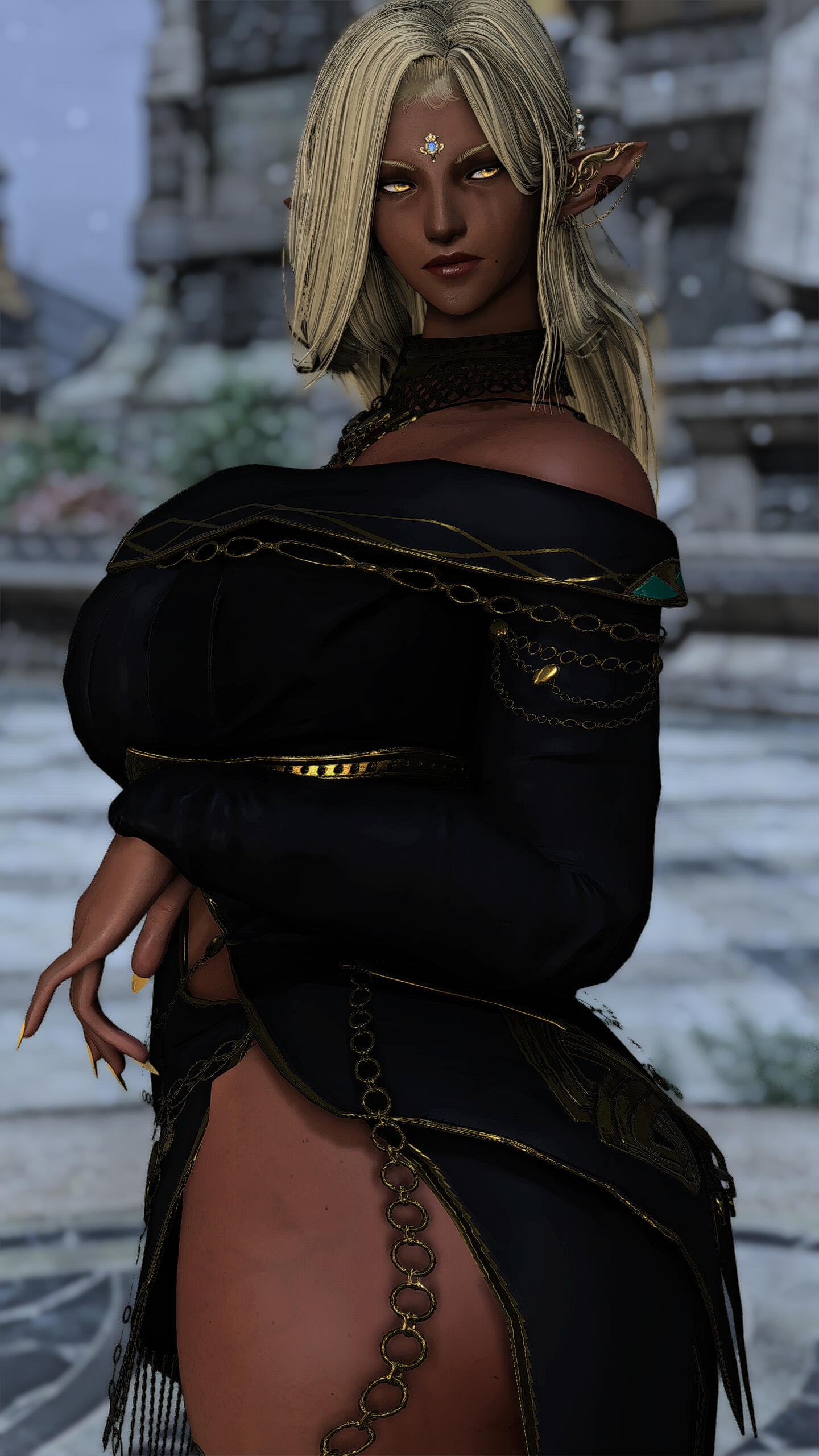
Lady Lazara
╰ A Whisper That Ruins Lives.
Lady Lazara was not born into silk sheets and candlelit halls. She was born in hunger, in cramped streets where people learned quickly that kindness did not fill an empty stomach. Poverty taught her a lesson she would never forget: the powerful did not deserve their power, they simply happened to possess it. From a young age she watched them closely. Their habits. Their arrogance. Their carelessness.When she entered the world of pleasure houses she understood something most others did not. In moments of indulgence people become careless. Nobles spoke too freely when wine flowed and their guard was lowered. Merchants bragged about fortunes they should have kept hidden. Officers whispered about decisions that were never meant to leave closed rooms. Lazara listened. She remembered every word.For years she gathered secrets quietly. Names. Affairs. Bribes. Deals made in shadow. Confessions spoken between soft laughter and candlelight. Where others saw temporary coin, Lazara saw leverage. Information became her true currency.Her clients believed she cared for them. She could play the role perfectly. Gentle smiles. Soft reassurance. A voice that made powerful men believe they were understood. In truth she despised them. They were weak creatures dressed in silk, men who believed wealth made them untouchable. Lazara knew better. Everyone has a weakness, and she had discovered theirs.When the time came she used what she had learned. A whisper here. A letter there. A reminder of what she knew and what could happen if it reached the wrong ears. Many paid willingly. Others paid out of fear. Either way, Lazara rose while they remained trapped by their own secrets.She no longer lives among them. Nobles avoid speaking her name too loudly, and the powerful think carefully before crossing her. Lazara has become something far more dangerous than a courtesan or a socialite. She is a collector of secrets, a broker of influence, a woman who understands that power does not come from gold or titles.Power comes from knowing exactly where a person is weakest.Lady Lazara stands tall and composed, a dominant and formidable presence. She rarely raises her voice and never needs to threaten. The knowledge she carries is enough. Those who meet her understand quickly that behind her calm gaze sits a mind that has spent years studying people, waiting for the moment when their weaknesses become useful.And Lazara has no intention of ever returning to the life she escaped.Not now. Not ever.
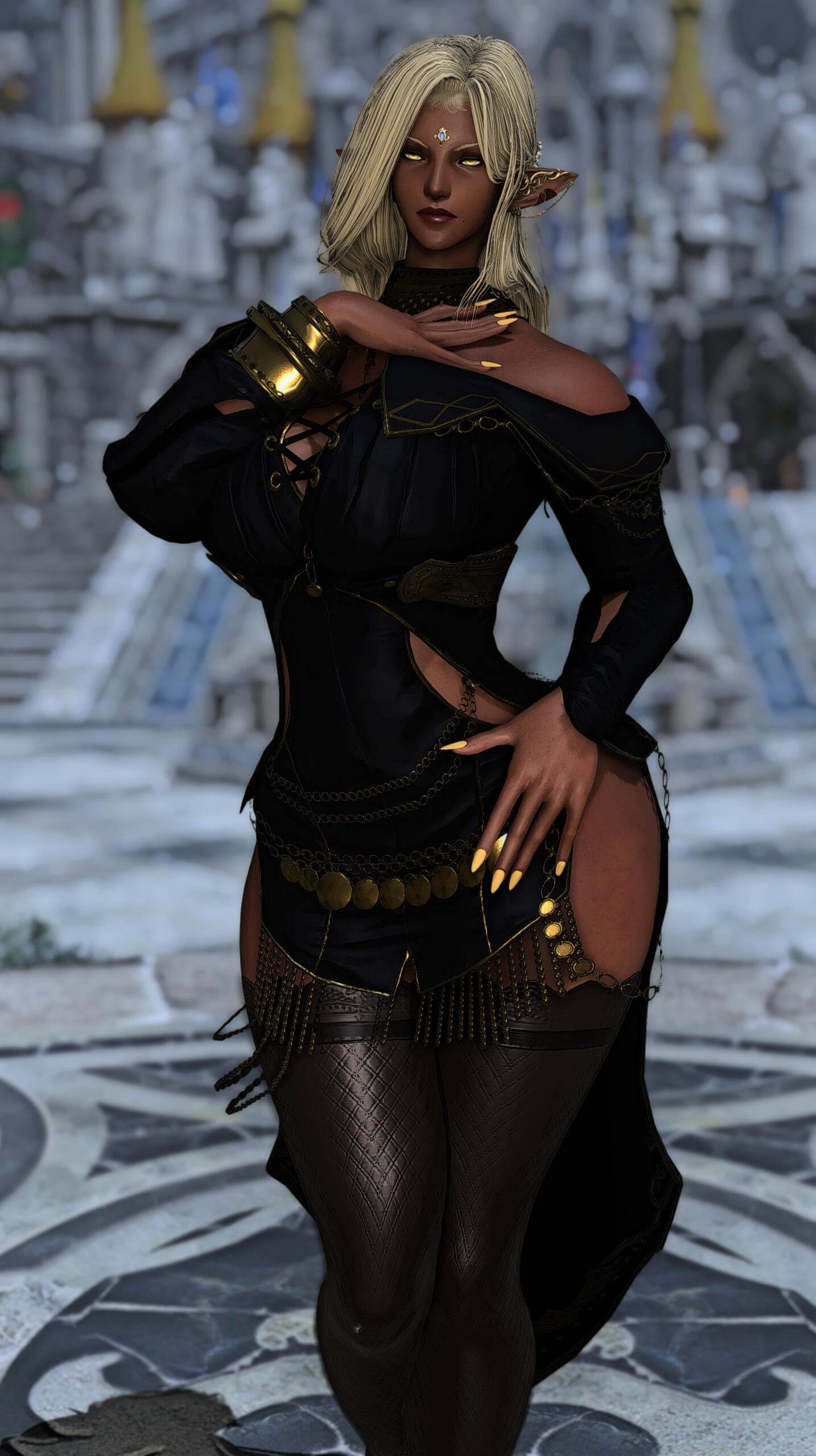
| AGE | 43 |
| PRONOUNS | She/her |
| SPECIES | Elezen |
| BIRTHDATE | 16th Sun of the 4th Umbral Moon |
| SEXUALITY | Bisexual |
| POSITION | Dom |
| RP STATUS | Active |
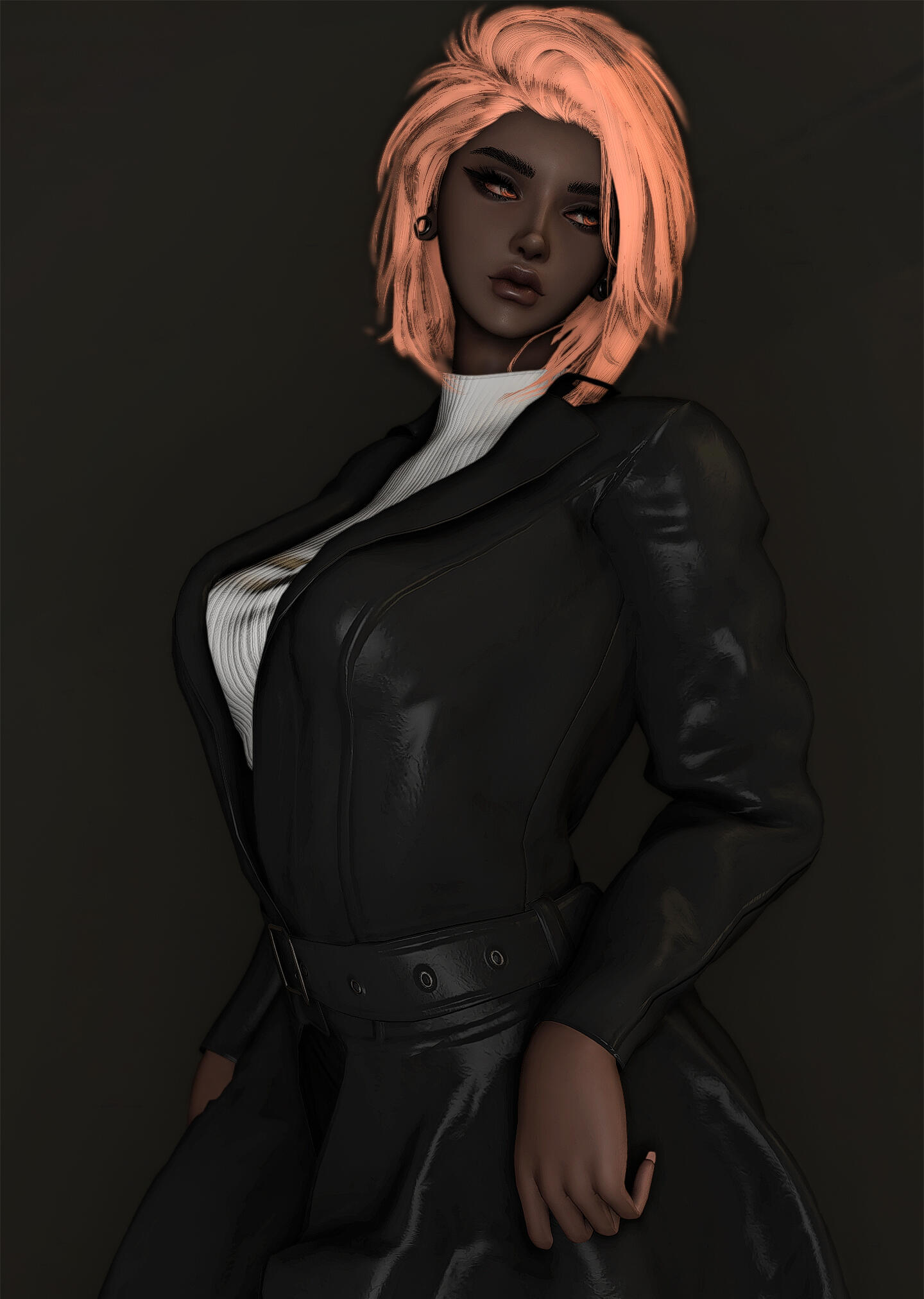
Clara Bridges
╰ Every lie leaves a trail.
Clara was shaped by Ishgard long before she understood what that meant, growing up beneath stone that never warmed, even in summer. The city taught her early that beauty and cruelty shared the same fate, that faith was louder than hunger, and that truth lived somewhere people did not dare to look. She learned to survive by observing rather than believing, her family existing in the gaps, not noble, not destitute enough to be pitied. They handled errands that required discretion, found what had gone missing, smoothed things before they became scandals. It was not illegal, per se, but it relied on the understanding that some matters were better handled quietly. Clara learned how to listen without reacting, how to remember the details others forgot, how to tell when someone was lying to protect themselves rather than to deceive.When the war ended, Ishgard did not become kinder, it simply found new ways to be indifferent. Old structures collapsed faster than new ones could replace them, knights returned broken or did not return at all, and the church softened its voice without ever loosening its reach. People who had survived by being useful found themselves unnecessary. Clara stayed, believing there would always be work for someone like her, and she was wrong. Clients stopped coming, coin dried up, those with money turned to official channels or quieter ones with better connections, and those without money had no reason to believe anyone would help them. Clara became a name spoken less often, if at all.She adapted, taking what little work she could find, lost children slipping through cracks no one wanted to admit existed, stolen pets, heirlooms taken out of greed, problems too small to matter. The pay was meagre, sometimes only a meal or a promise that did not hold, and still she accepted, because refusing meant disappearing completely. Hunger became a constant companion, and with it came understanding, how people justified things they once swore they would never do. Desperation does not announce itself as desperation, it calls itself necessity.She considered selling herself more than once, and she knew she could. Men would pay well for someone like her, honey-blonde hair catching low light, tan skin warm against Ishgard’s cold stone, eyes the colour of embers watching more than they revealed, a stunner undeniably. She also knew what that road took from people, piece by piece, until there was nothing left to bargain with, and she did not take it. Pride stopped her, but so did refusal, because if she was going to disappear, it would not be by surrender.Clara walks the edge now, understanding corruption intimately, knowing how easily rules bend and how often justice is bought or buried. She does not pretend to be clean, she only chooses her compromises carefully. She will lie if she must, threaten if it works, and walk away when the cost is too high, even if it means going hungry another night. Her mind is always moving, assembling patterns from scraps others overlook, watching posture, hesitation, breath, her face carrying the look of someone who has seen enough to be wary, and cruel when the moment calls for it.People do not come to her often, but when they do it is because they have nowhere else to turn. Clara listens, finds what can be found, returns what she can, each case small, almost insignificant, but still proof that she is there, still choosing, still refusing to fall cleanly into what the world expects her to become.
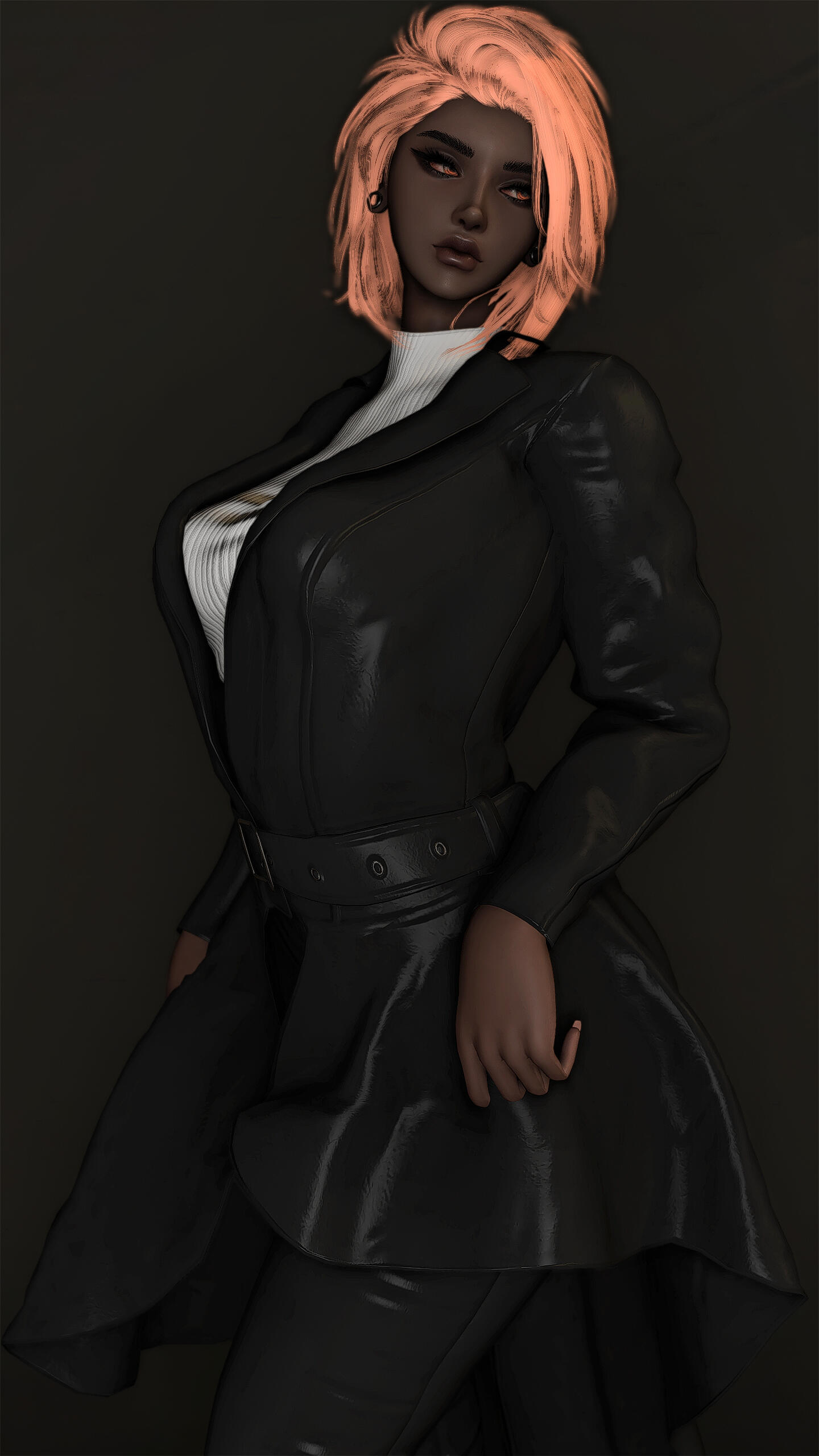
| AGE | 31 |
| PRONOUNS | She/her |
| SPECIES | Hyur |
| BIRTHDATE | 1st Sun of the 3rd Umbral Moon |
| SEXUALITY | Bisexual |
| POSITION | No roles or dom |
| RP STATUS | Active |
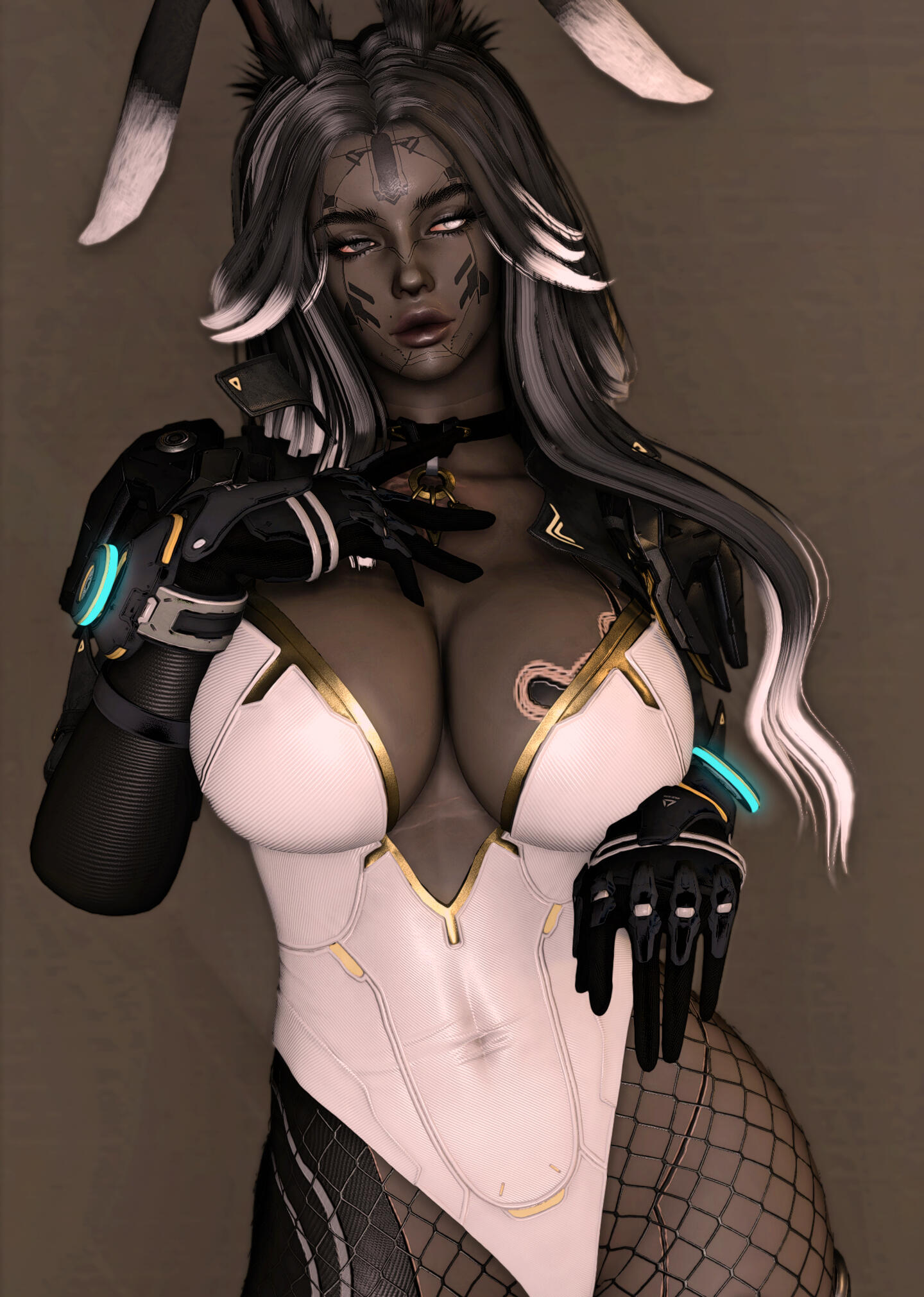
Ava.
╰ A heart that refuses to rust.
Warning: Major spoilers for the weapons questline.Ava was born in the northern lands that would one day become the heart of the Garlean Empire. She was Viera by blood, though she would spend most of her life separated from that identity. Her people lived quietly at the edges of imperial territory, but the Empire had little patience for those it believed could serve its ambitions. Her father was taken first. Imperial scientists had begun experimenting with ways to overcome the limits of the human body. Garleans lacked the ability to manipulate aether, and so they sought strength through machinery instead. Flesh was reinforced with metal, nerves were connected to mechanical systems, and living bodies were altered into weapons meant to compensate for what the Empire lacked. Ava’s father became one of their subjects and did not survive the process.
Not long after, Ava herself was taken. The Empire saw in her another opportunity to refine their work. Years followed in which her body was altered piece by piece. Bone was strengthened, organs reinforced, and parts of her body were replaced or supplemented with mechanical components. Steel and circuitry were grafted onto living flesh until the child she had once been was nearly unrecognisable. By the time the experiments were finished she was no longer simply Viera, nor entirely machine. The Empire had created a weapon that would not weaken easily and would not age as a natural body would. They believed that meant they had broken her.What they failed to remove was her will. The instinct to survive remained stronger than their conditioning. She endured their control for years, learning the limits of the body they had forced upon her and watching those who believed they owned her. When an opportunity finally appeared she acted without hesitation. The rebellion was violent and unforgiving. Ava turned the strength the Empire had given her against those responsible for her creation. Scientists and handlers died by the weapon they had built. When it was over she fled the facility, leaving Garlemald behind with nothing except the altered body they had forced upon her and the memories she could not escape.Her escape eventually carried her south into Eorzea. She expected fear or hostility from anyone who saw what she had become. She had no name, no home, and no identity beyond survival. It was during this time that she encountered Gaius van Baelsar. Once a legatus of the Garlean Empire, Gaius had turned away from the corruption that had consumed it. In the coastal settlement of Terncliff he had gathered several orphaned children left behind by war and imperial collapse. When Ava first came before him she expected suspicion or judgment. Instead she was met with patience. Gaius did not see a weapon. He offered her a place among the small household he had built.At first she resented it. The name van carried the weight of the Empire that had ruined her life, and kindness felt unfamiliar after everything she had endured. She remained distant and cautious, expecting the illusion of safety to break at any moment. Yet the hostility she expected never came. Over time she became part of the quiet life in Terncliff. The children Gaius had taken in, many of them Au Ra, accepted her presence without question. To them she was not an experiment or a machine. She was simply someone who was there when they needed help, someone who watched over them when Gaius was away.It was in Terncliff that she received something she had never possessed before. The people there gave her a name. Ava. Before that moment she had never truly had one. The Empire had treated her only as a subject or an asset, something that existed to serve a purpose. A name meant identity, and identity meant being recognised as a person. She kept the name carefully because it represented the first time anyone had looked at her and seen something other than a weapon.For a time life in Terncliff was peaceful. Ava helped care for the children and slowly learned what it meant to live among others rather than apart from them. Though her body still carried the marks of the Empire’s work, she began to believe that perhaps she could become something more than what they had made her. That fragile peace ended when the Weapons appeared. The war machines brought devastation with them, and Ava fought to defend the town with everything she had. Even so the power of the Weapons was beyond what she could overcome alone. One by one the children she had helped raise were taken from her.Rage filled her. Every instinct born from the Empire’s experiments urged her to hunt the machines responsible and destroy them. It was Gaius who held her back, knowing that vengeance would only destroy what little humanity she had managed to preserve. In the end the threat of the Weapons was stopped by the Warrior of Light, but the victory did nothing to undo what had already been lost.One of the children, Allie, survived the conflict but was left in a catatonic state. Though she lived, the girl who had once laughed and spoken freely was gone. Ava chose to remain beside her. She cared for Allie patiently, day after day, as though the quiet act of staying might somehow make up for the moment when she had been unable to protect them.Ava remains in Terncliff even now. Her body does not age, the mechanical systems within her keeping her locked in an unnatural permanence. The world moves forward while she remains much the same as she was on the day she escaped Garlemald. The memories of violence and loss have never left her. Yet the name she received in Terncliff remains just as firmly. Ava still wonders whether someone created as a weapon can ever truly be human again. She questions whether she deserved the kindness she was shown and whether she could have done more to protect the children she had come to love. Despite those doubts she continues to endure, because the life she found in Terncliff gave her something she had never known before. It gave her a reason to believe that she can be more than what the Empire made her.
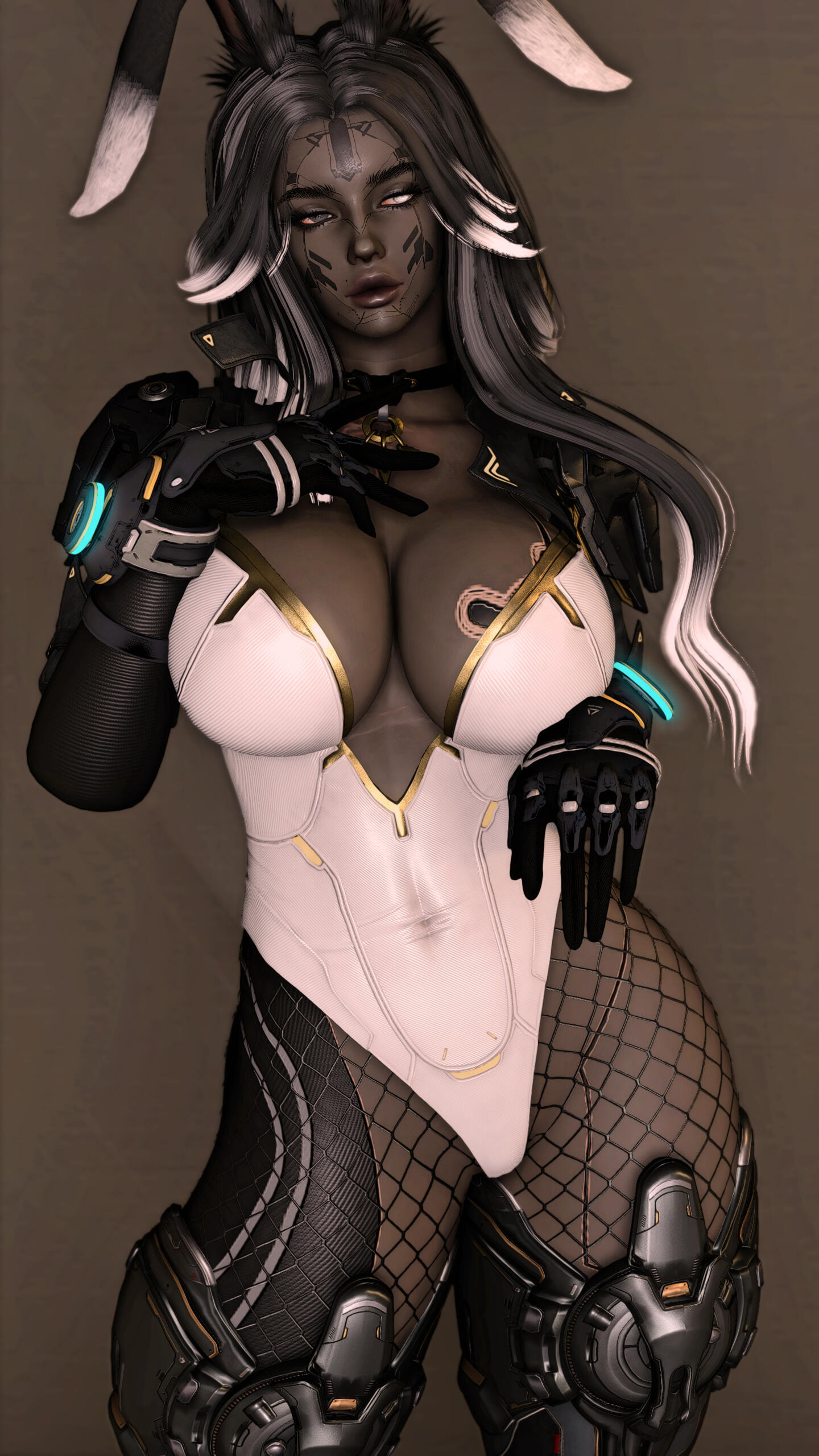
| AGE | Unknown |
| PRONOUNS | She/her |
| SPECIES | Former Viera |
| BIRTHDATE | Unknown |
| SEXUALITY | Bisexual |
| POSITION | No roles or Dom |
| RP STATUS | Active |
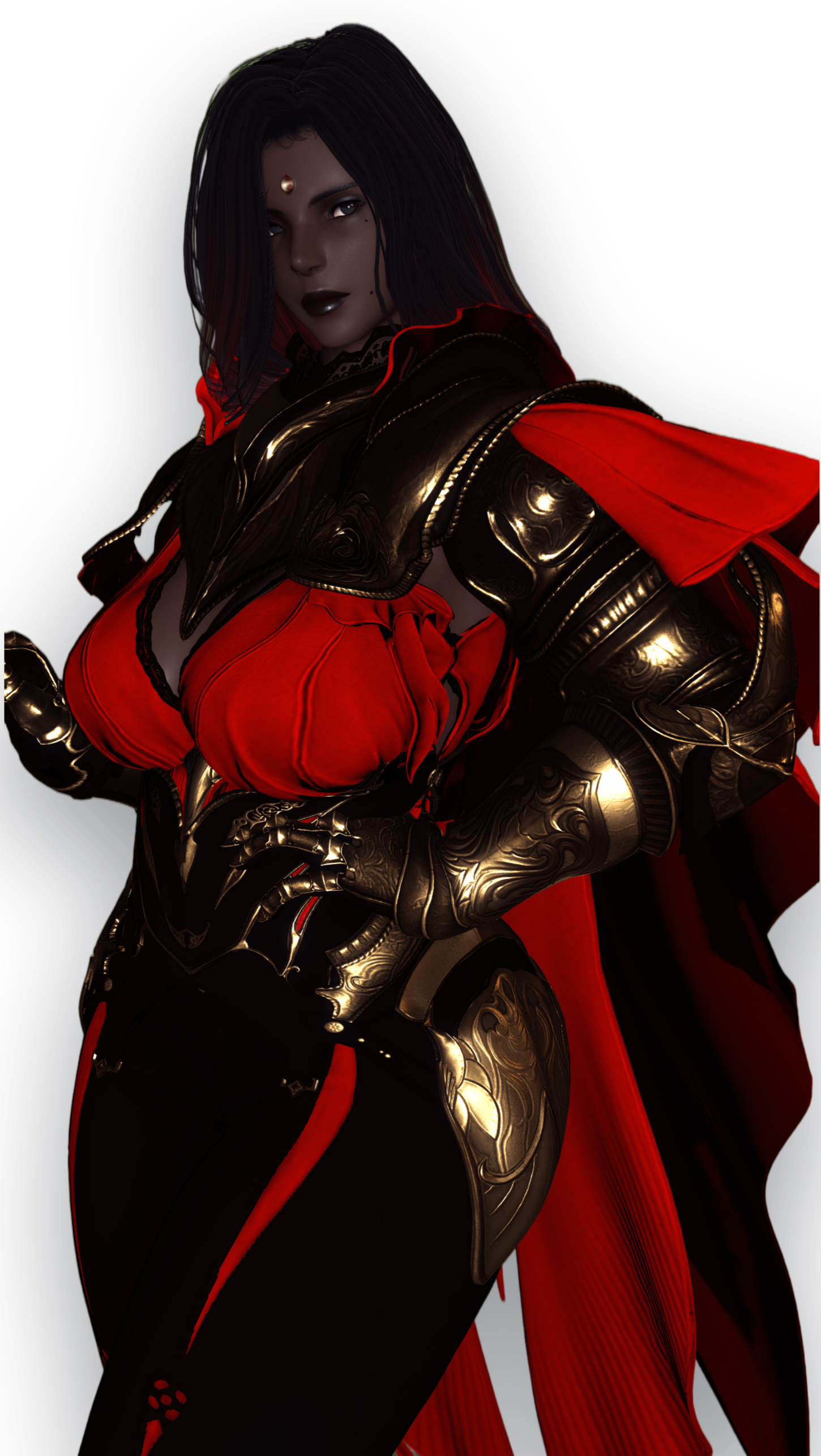
Aurelia van Celsus
╰ Daughter of the Empire.
Aurelia van Celsus was born beneath the cold skies of Garlemald, in a nation whose very existence she would come to regard as an act of defiance. The Garleans had not been blessed with the ability to manipulate aether as others had. They had once been driven from fertile lands and forced north into an unforgiving wasteland, where warmth and survival were things to be manufactured rather than taken for granted. Yet they endured. From ceruleum came industry, from industry came magitek, and from a people once pushed to the edge of the world came an Empire powerful enough that none could ever do so again. Aurelia grew up surrounded by that achievement. She loved the snow-covered streets of the capital, the glow of ceruleum lamps against the winter dark, the distant hum of machinery and the Imperial standards hanging proudly above a city built where others might have simply perished. Garlemald had taken everything the world denied its people and built something greater in its place. Aurelia could imagine no greater honour than serving it.She entered the Imperial military young and proved herself an able soldier before becoming a far more capable officer. Aurelia possessed little appetite for glory won at the expense of good sense, preferring careful planning, reliable supply lines and victories that left enough soldiers alive to enjoy them. A Garlean life thrown away through incompetence was not merely a military loss, but a citizen who would never return home. She expected discipline from those beneath her and competence from those above, and had little patience for either cowardice or vanity masquerading as courage. The same practicality made her ruthless when Imperial lives were threatened. Rebellions were put down before they could spread, insurgents were hunted without sympathy, and those who knowingly endangered her soldiers quickly discovered how little mercy Aurelia afforded an enemy. Her methods were often severe, but her successes were difficult to dispute. Rank followed rank until at last came the title she would carry more proudly than any honour before it: van. Aurelia van Celsus had earned her place among the commanders of the Empire.Yet war was never all she wanted for Garlemald. Aurelia believed conquest meant little if the homeland itself did not prosper. She admired engineers as readily as soldiers and regarded technological advancement as the foundation upon which Garlean independence had always rested. Better infrastructure, greater education, stronger industry and continued innovation mattered as much to her as another province painted Imperial colours upon a map. Garlemald had survived because its people had learned to accomplish through machinery what others achieved through aether, and Aurelia wanted the gap between them narrowed until there was nothing left for a Garlean to envy. She wanted furnaces burning, laboratories funded, children educated and cities expanding. The legions existed to ensure that such a future could never again be taken from them.In Varis zos Galvus she found an Emperor she could serve without reservation. Aurelia admired his strength and the weight with which he carried the responsibilities of the throne, and for a time she believed Garlemald remained secure beneath him. She had once held similar admiration for Gaius van Baelsar, whose campaigns she studied and whose reputation represented much of what she respected in an Imperial commander. That admiration died with Black Rose. When Gaius turned against the weapon and condemned it as extermination rather than conquest, Aurelia saw only a man placing his conscience above his country. She knew what Black Rose was capable of and understood perfectly well why others feared it, but fear had never stopped Garlemald's enemies from using every advantage nature had granted them. They could manipulate aether where Garleans could not. They wielded magicks against soldiers who had been born incapable of answering in kind, and their ancestors had once used those advantages to drive the Garlean people into the frozen wastes they now called home. Black Rose was terrible, but Aurelia saw no virtue in throwing away a weapon merely because it was terrible. If it protected Garlemald from ever being driven into the snow again, then its existence was justified. Gaius destroyed it regardless, and from that moment Aurelia no longer spoke his name with admiration. He was a traitor.Zenos was different. Aurelia never admired him enough to feel betrayed by him. She obeyed him because he possessed legitimate authority and because an officer did not fracture the chain of command whenever she disliked the person standing above her. Privately, however, she found him contemptible. Zenos had been born into the Imperial family and given everything Aurelia had spent her life defending, yet Garlemald itself seemed to mean nothing to him. Its armies were tools, its wars entertainment, its people little more than pieces upon a board arranged around his own desires. Aurelia could understand ambition, severity and even disastrous judgement from someone who genuinely believed they were acting for the Empire. What she could not understand was selfish indifference towards it. Still, she obeyed. Garlemald was greater than Zenos, and Aurelia would not harm her country merely to satisfy her feelings about the man who ruled it.Then the pieces began to fall. Aurelia would later think of the Empire's destruction as a tower slowly robbed of its supports, one disastrous decision followed by another until something that had appeared immovable suddenly collapsed beneath its own weight. Black Rose was destroyed. Gaius turned against the Empire. Resistance across Imperial territories intensified. The royal family fractured. Varis died. Zenos cared more for his own pursuits than the nation collapsing around him. Within the capital itself there always seemed to be another struggle, another inexplicable decision, another powerful figure pulling Garlemald somewhere it should never have gone. Aurelia never knew of the Ascians or understood how deeply foreign hands had reached into the Empire's creation and politics. She saw only the consequences. Something had been wrong within Garlemald for years, something she could never identify, and by the time the structure finally gave way there were too few pieces remaining to hold it together.Aurelia fought against that collapse for as long as she could. She gathered soldiers, secured supplies, restored broken communications and followed the chain of command while there remained a chain worth following. One superior disappeared, then another. Legions stopped responding. Orders became confused before ceasing altogether. Men and women who had once commanded thousands scattered with whatever remained beneath them, while civilians froze and starved in the streets of a capital that had once dictated terms to nations. Aurelia watched Imperial standards disappear from positions she had believed would never fall. She watched soldiers discard uniforms they had once worn with pride. Worst of all, she watched Eorzeans enter Garlemald carrying food, medicine and blankets, offering salvation to the same people whose Empire they had fought to destroy. Aurelia could hardly blame a starving mother for accepting food for her child or a freezing man for taking a foreign coat, yet every grateful hand reaching towards an outsider felt like another humiliation. Garleans had once built a civilisation from frozen earth because nobody else would save them. Now they survived upon foreign mercy.For one night, Aurelia could bear no more. Varis was dead, the legions were shattered, the capital lay ruined and the Empire to which she had devoted her life appeared to have vanished beneath her feet. She cleaned herself, dressed properly in her uniform and sat alone with her service weapon. There seemed little reason for Aurelia van Celsus to survive a country that had not survived with her. She raised the weapon and came close enough that afterwards she would remember the pressure of cold metal more clearly than anything else about that night. Yet when death stood only the movement of a finger away, grief gave way to something much more familiar. Anger. Aurelia had ordered soldiers to stand when they were afraid. She had demanded sacrifice from people who trusted her command. Garleans were still freezing outside while foreigners walked through their homeland, and she was preparing to desert them because remaining alive had become unbearable. The thought disgusted her. She lowered the weapon, and whatever part of Aurelia had been willing to accept the death of Garlemald died instead.The mistake had been believing that Garlemald was its Emperor, its capital or even its legions. Those things could be destroyed. Garleans remained. So long as her people survived, their country had not ceased to exist merely because their enemies had begun speaking of it in the past tense. Aurelia returned to the old Imperial frequencies and transmitted her identification into the silence. Aurelia van Celsus. Her rank remained van. There was no zos above her to answer to, no Emperor from whom she could seek new authority, and she would not cheapen the titles of the Empire by granting herself honours she had never earned. Perhaps other van had survived somewhere beyond her reach. Perhaps she stood alone. It changed nothing. She had been an officer of the Garlean Empire before its collapse, and until a legitimate authority relieved her of that duty, an officer of the Garlean Empire she would remain.At first her broadcasts concerned survival. Soldiers were ordered to report their positions. Engineers were called to restore generators and communications. Food, medicine, ceruleum, weapons and functioning magitek were catalogued and redistributed. Civilians were directed towards places that could shelter them from the cold. Aurelia's voice began reaching abandoned castrums, ruined settlements and radios that had carried nothing but static for weeks. Some ignored her. Others answered. Soldiers returned to uniforms they had discarded. Engineers recovered machinery thought lost. Civilians arrived looking for food and found people flying Imperial standards above the buildings that housed them. What began as scattered survivors slowly became something organised, and Aurelia refused to call them remnants. A remnant was what remained after something had ceased to exist. They were not what remained after Garlemald. They were Garlemald.Her ambitions soon stretched beyond keeping people alive. Aurelia wanted generators running because tomorrow she wanted workshops running beside them. She wanted children fed because one day she wanted them educated. She wanted engineers repairing old magitek because eventually she wanted them designing something better. Soldiers drilled again, supplies were counted, records were preserved and Imperial discipline returned wherever her authority reached. Those who threatened the fragile communities beneath her protection found Aurelia as merciless as she had ever been during the height of the Empire, while the Garleans living within them found a commander determined to ensure that survival meant more than waiting for another foreign shipment of food. Aurelia did not want her people dependent upon Eorzea. She wanted furnaces burning, factories operating, roads cleared and a generation of Garleans growing up believing their homeland had a future.She does not know whether she will live to see that future. Perhaps the Empire she remembers can never be restored exactly as it was. Perhaps Aurelia will die commanding a few hundred loyalists beneath a tattered standard while the rest of the world remembers Garlemald only as something consigned to history. She has made peace with that possibility. Rebuilding a nation may require decades, and Aurelia has never believed her own life more important than the country she serves. If she can preserve enough for another Garlean to continue after her, then she has succeeded where that frightened woman with the service weapon almost failed.The radios still crackle to life. The soldiers still answer. Somewhere beneath the bitter Garlean sky, ceruleum burns and the old standard rises over people who refuse to call themselves defeated. Aurelia asks for no crown and claims no throne. She needs neither. She earned her name while the Empire still stood, and she intends to carry it until she no longer can.Aurelia van Celsus. Daughter of the Empire.Garlemald is wounded. Garlemald is humiliated. Garlemald has lost almost everything.But Garlemald is not dead.Neither is she.
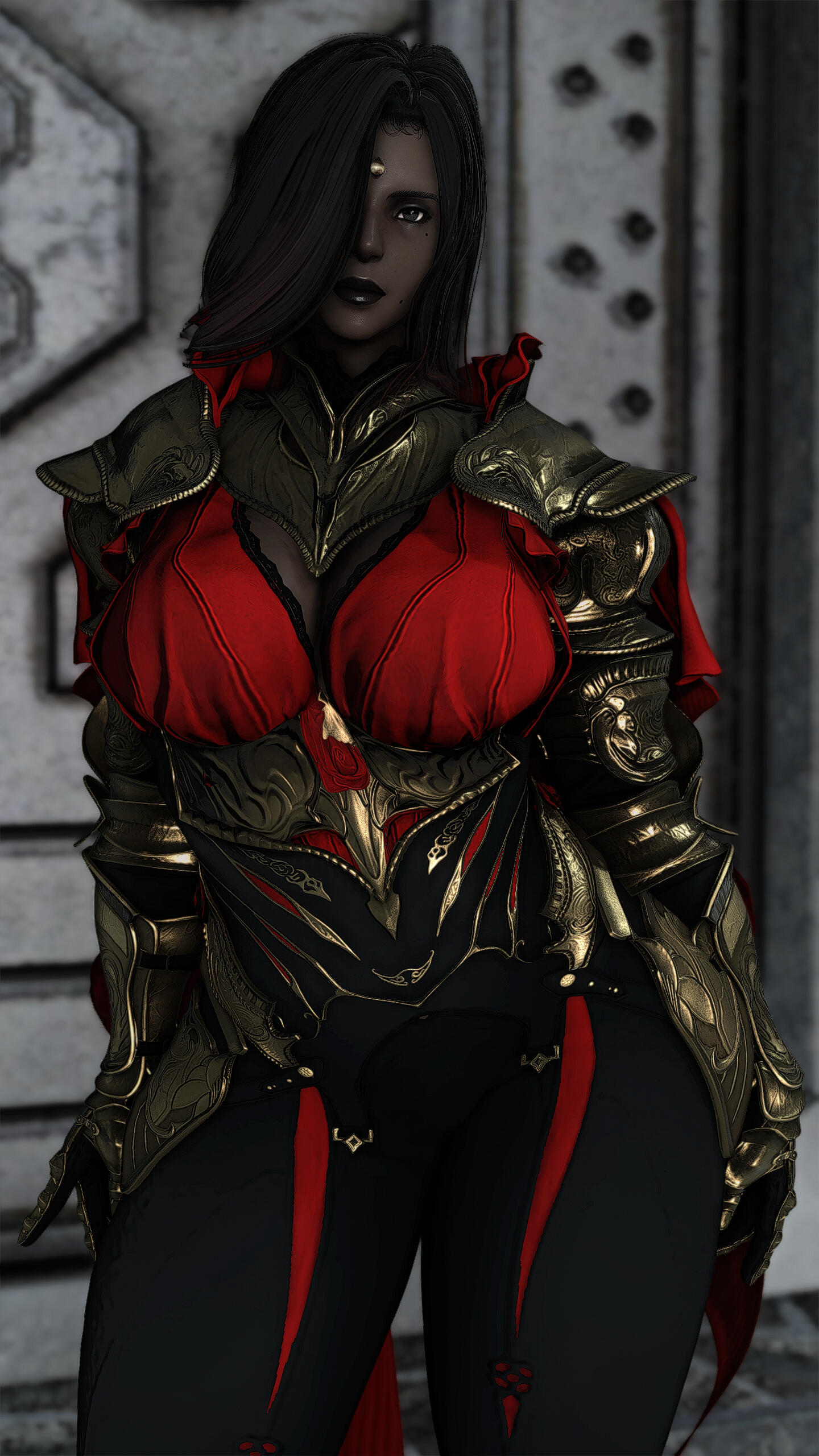
| AGE | 40 |
| PRONOUNS | She/her |
| SPECIES | Garlean |
| BIRTHDATE | 16th Sun of the 6th Astral Moon |
| SEXUALITY | Bisexual |
| POSITION | Dom |
| RP STATUS | Active |
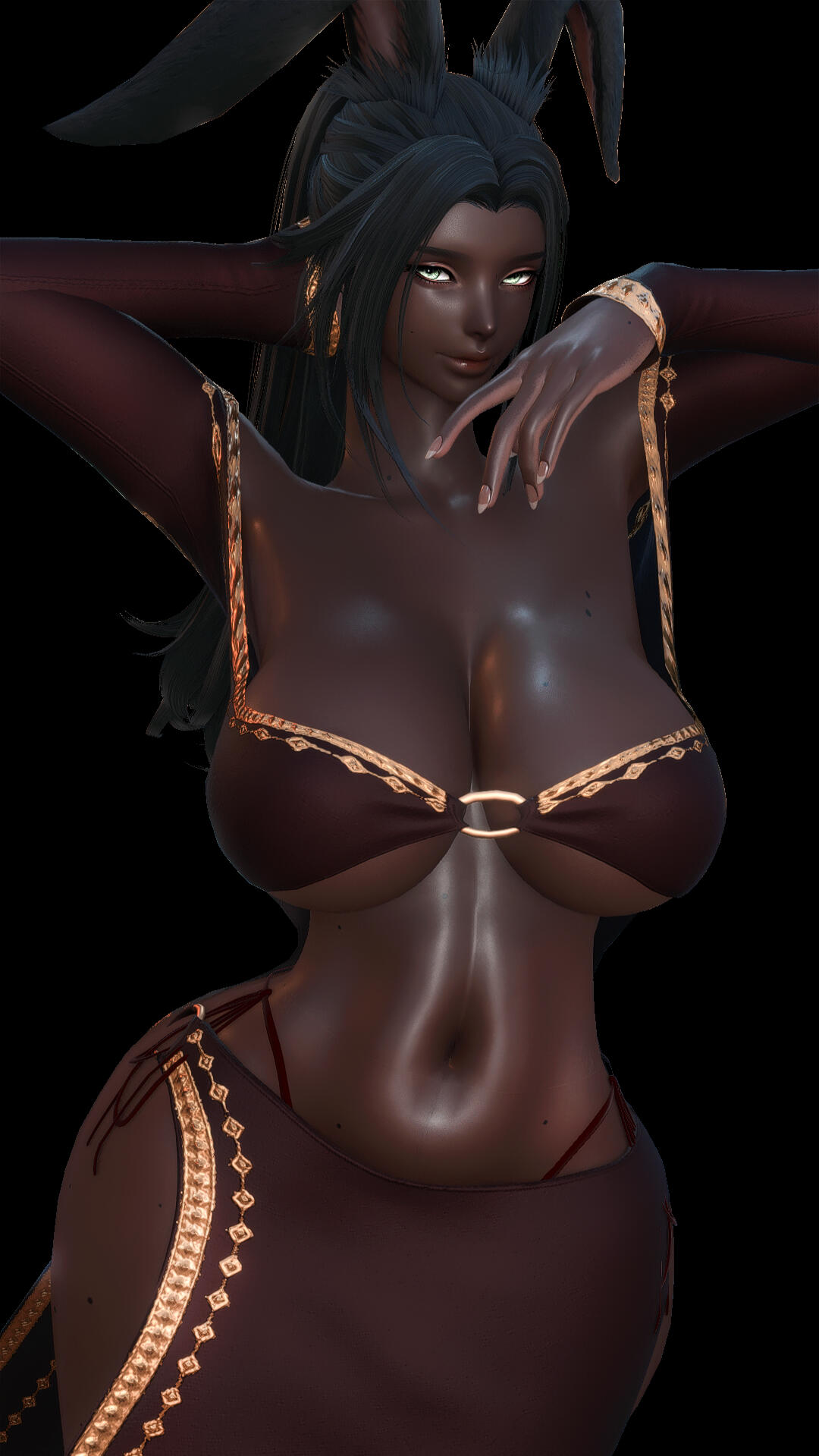
Lakshmi Sundari
╰ The Lotus in Bloom.
Lakshmi Sundari was not born among her own kind. She was found in the Fringes, a Viera child lying alone where no child should have been, untouched and unafraid. It was the Ananta who discovered her. Where others might have hesitated, they felt only calm. No ill omen stirred, no doubt took hold. They took her in without question and named her Lakshmi Sundari, the name coming to them as easily as breath.She was raised among them as one of their own. She learned their ways, their patience, and their quiet reverence for stillness. Yet even as a child, there was something about her that could not be taught. Those who came near her felt lighter. Anger dulled, grief softened, and unease seemed to settle without effort. People lingered in her presence without knowing why.At first, she thought little of it. Kindness, she believed, was enough to explain it. But as she grew, there were moments that did not feel like her own. Words spoken with a certainty she had not intended. A calm that spread too quickly, too completely. A presence that remained even after she had fallen silent.The Ananta never questioned it. To them, the self was not so fixed as others believed. Life turned, returned, and took new shape as it always had. If a soul could be born again, then why not one such as this? They did not speak of it often, but in quiet moments, they treated her less as a child to be guided and more as something already complete, simply passing once more through the world.Sundari, however, began to understand that what lived within her was not something she had learned. It was something she was beginning to remember. Not all at once, and never clearly, but in fragments that surfaced when her emotions ran too deep to ignore. In moments of compassion, something in her reached outward. In moments of quiet resolve, her voice carried weight beyond her own.And at times, it goes further than that.There are moments where the calm deepens into something absolute. Her thoughts quiet, not forced, but set aside. The world feels distant, as though softened at its edges, and when she speaks, the words come without hesitation, shaped by something older than herself. It does not feel like being taken. It feels like the self loosening, like a boundary that was never meant to be permanent. As though what she calls “I” is only one shape among many.When it passes, she remains. Whole, aware, and unchanged in body, yet not untouched. There is a stillness that lingers, and a sense that something within her has settled more firmly than before. The more it happens, the less it feels like something entering her, and the more it feels like something she has always been, waiting beneath the surface of this life.She has not turned away from it, nor has she fully accepted it. She still lives as she was raised, gentle and composed, holding onto the life she knows. Yet she cannot ignore the question that follows her now. If the self is only a passing form, then what is she truly holding onto? And if this life is only one turning of a greater cycle, then what awaits her at its end?She may remain as she is, a woman shaped by a life she understands. Or she may allow that deeper self to unfold, not as something gained, but as something remembered.The gods are patient. The cycle does not rush.And within her, Sri Lakshmi does not wait. She simply is.
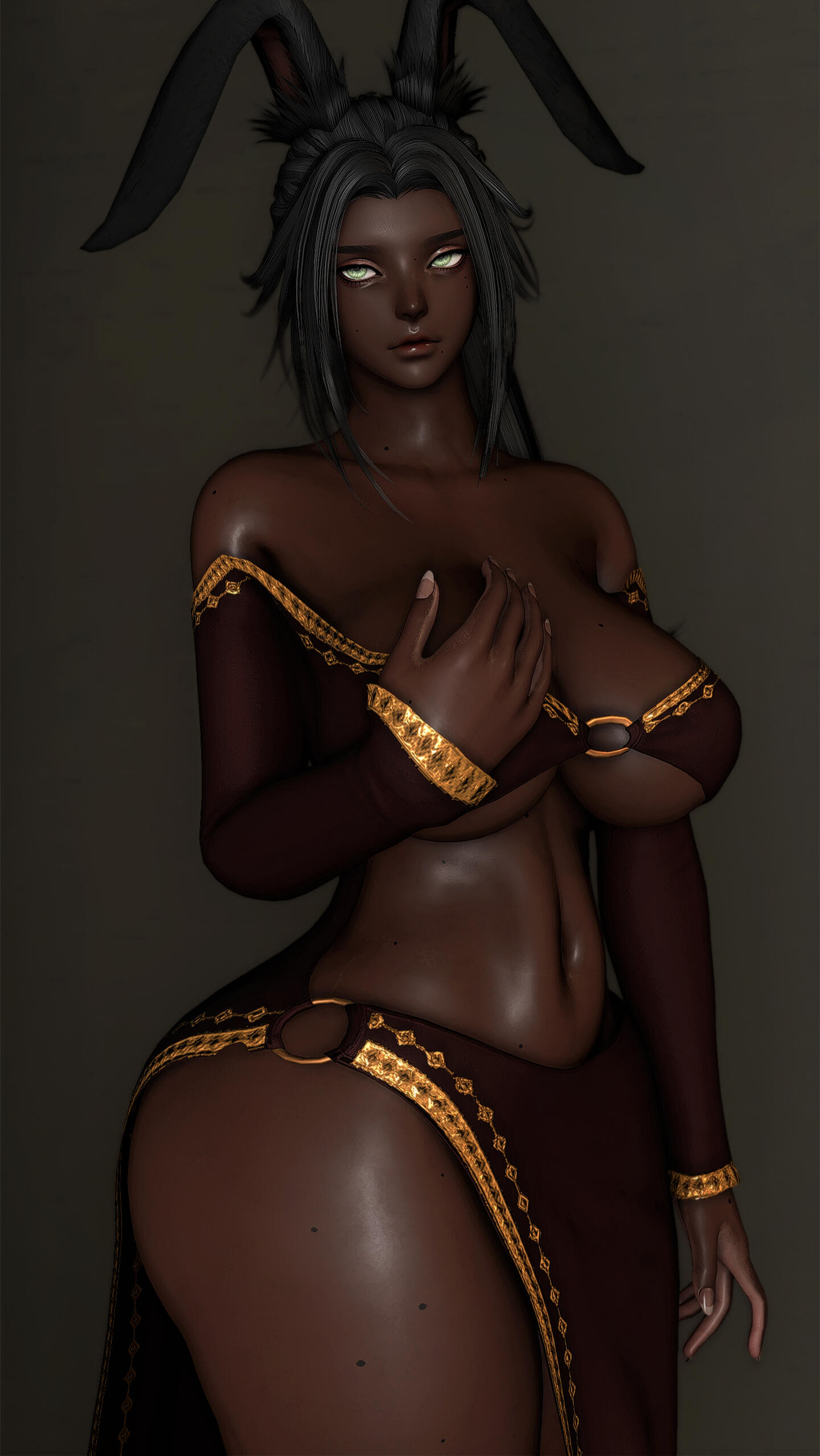
| AGE | 41 |
| PRONOUNS | She/her |
| SPECIES | Viera |
| BIRTHDATE | Unrecorded |
| SEXUALITY | Gay |
| POSITION | Dom |
| RP STATUS | Active |
| The Awakening |
|---|
| Dormant Lotus |
| The natural state in which Lakshmi Sundari spends most of her life. She is wholly herself, though those around her often leave calmer than when they arrived. Tempers cool, burdens seem lighter, and conversations come more easily. Few notice anything unusual. Fewer still question it. |
| Awakened Bliss |
| As her emotions deepen, so too does the presence of Sri Lakshmi. Compassion begins to spill beyond words, settling over those nearby like a gentle tide. Fear eases, anger falters, and weary hearts find unexpected comfort. Sundari remains herself, but the line between woman and goddess begins to blur. |
| Voice of the Goddess |
| The rarest and most profound state. Sundari does not disappear, nor is she possessed. Instead, she willingly steps aside as Sri Lakshmi rises to the surface. Her thoughts become still, her voice carries quiet certainty, and her presence is almost impossible to ignore. Those around her often describe an overwhelming sense of peace, as though, for a brief moment, the world itself has fallen silent. When it passes, she returns unchanged in body, yet each awakening leaves the boundary between herself and the goddess a little thinner than before. |
COURT CORRESPONDENCE Should any character here catch your interest, you may contact me through the following:Discord: queenyharnam
In-game: Queen YharnamI usually prefer in-game roleplay. I am flexible and can adapt to my partner’s writing style.